Total Pageviews

Showing posts with label consistency. Show all posts

Tuesday, 5 August 2014

9 MYTHS ABOUT FEMALE SELF DEFENCE


Myth #6 Women who survive are fearless.
The first effect in any violent situation is emotion, and the most common one is fear. When a man steps in front of you holding a knife, your adrenaline starts pumping and your heart beats faster. These are reactions that can't be avoided—nor should they be. It's the fight-or-flight survival instinct that allows you to focus on beating your enemy or getting the hell out of there.
 
Many people fear they will freeze up or act irrationally. When you know how to respond, you'll still feel a certain amount of fear that you could be hurt, or that you're about to cause harm to another human being, but that will be tempered with confidence.
 
Myth #7 Focus on blocking his attacks.
Many self-protection classes teach you to react to an attacker's actions. This defensive thinking can make you hesitate ("What is he going to do to me?"), lose focus (waiting to get hurt makes most people freeze), and ultimately be one step behind the attacker. In a threatening situation, don't worry about what he's doing; make him worry about what you're doing.
 
Myth #8 Try to back away from your attacker.
In life-threatening conflict, if you're not injuring someone, you're getting injured. Backing up or attempting to counter his "technique" with another technique (as is typically taught in self-defense classes) only gets you in more trouble: Your body is a lot better at going forward than it is at going backward; for every two feet you move backward, he can move forward three feet.
 
Myth #9 Hit as often and as quickly as possible.
Punching and kicking are akin to slapping an attacker around. If you're in danger, you need to throw all your weight into a single target, or "strike." Imagine you're facing a giant predator and you have a big sack full of rocks. Throw a single rock and "ouch!" is the only reaction you're likely to get. But swing the entire sack at him, hitting him in the head, and he'll be out cold. That's the difference between punching and striking.

Tuesday, 29 July 2014

LOSE THOSE FLABBY ARMS 2!!!

Chair Dips: dips are another common exercise that help develop the triceps, while also working the pectorals and major shoulder muscles. All you need to perform this exercise is an exercise bench or step, though a kitchen chair will also work just fine.
To perform a basic bench dip:
  1. Sit up straight on the edge of the bench or chair, extending your legs in front of you and planting you feet firmly on the ground.
  2. Firmly grip the edge of the bench or chair, with your fingers facing downwards. Slowly slide your body off the bench, without moving your legs.
  3. Slowly lower your body towards the floor, keeping your back straight, until your arms from a 90 degree angle.
  4. Push your body back to the original starting position. You have now completed one repetition.
Variations: To increase the difficulty of the bench dip, try propping your feet up on a second exercise bench or chair.
Old school arm circles. Arm circles are a great, easy exercise that can be performed anytime, anywhere, making them a great exercise option for beginners. Arm circles help to tone both your biceps and triceps, while also strengthening the back and shoulders.
To do arm circles:
  1. Stand with your feet about a shoulder width apart and extend your arms straight out to the sides, so they’re in line with your shoulders.
  2. Begin rotating your arms forward in small, circular motions, without moving your wrists or elbows.
  3. After about 20 circles, change direction and begin rotating your arms backwards.
Variations: To increase the intensity of the arm circles, you can rotate your arms faster or use hand weights that are light enough to allow you to do 8-10 rotations.
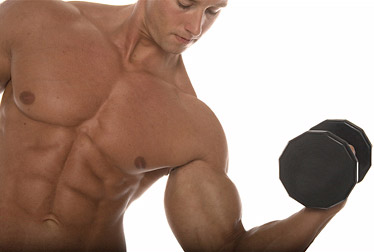
Targeted bicep curls. Bicep curls are one of the most basic weight lifting exercises, which help you to build arm strength and look good in short sleeves. Bicep curls target the three bicep muscles which control the flexing of your elbow.

To do bicep curls, you will need a set of dumbbell that weigh between 5 and 15 pounds each.
  1. Hold a dumbbell in each hand and stand up straight with your feet hip width apart.
  2. Let your arms hang relaxed at your sides, with your palms facing forward.
  3. With your elbows held at your hip bones, slowly raise both weights until your forearms touch your chest.
  4. Slowly lower the weights back into the starting position, maintaining tension in your biceps. Make an effort to maintain good posture at all times, with your back straight and stomach pulled in.
Variations: If you are performing this exercise at your local gym, look for an arm-curl machine which will target the exact same muscles as the dumbbells. If you’re doing the exercises at home for the first time, you can also use a standard 15 oz can of beans or peas to perform this exercise.

Monday, 28 July 2014

LOSE THOSE FLABBY ARMS!!! Part 1

They have many names, but they are best known as 'Christian mother' arms. Flabby triceps have been a bother to many women for centuries, irrespective of race. These arms have caused lots of embarrassment to individuals and with time, can affect a persons confidence.
 
Side plank reverse fly. This is a great exercise for building overall upper body strength. Although it doesn’t target the arms specifically, it will help build the necessary strength to do other arm-specific exercises. It is also fantastic for the oblique muscles along your side.
 
To perform the side plank reverse fly:
  1. Lie down on your side on the floor and prop yourself up with either your hand or elbow. The elbow is an easier option for beginners.
  2. Stack your feet one on top of the other and lift your hips off the floor so that your body form a diagonal line.
  3. With your free hand, grab a dumbbell and extend your arm straight up, keeping it in line with your shoulder.
  4. Slowly lower the dumbbell in front of you, until your arm is perpendicular to your body.
  5. Slowly raise the dumbbell back up, forming a “T” shape with your arm and the dumbbell. You have now completed one repetition.
Variations: Instead of stopping when the dumbbell is perpendicular with your body, you can keep going, rotating your body and twisting the dumbbell underneath, before returning to the starting position.
 
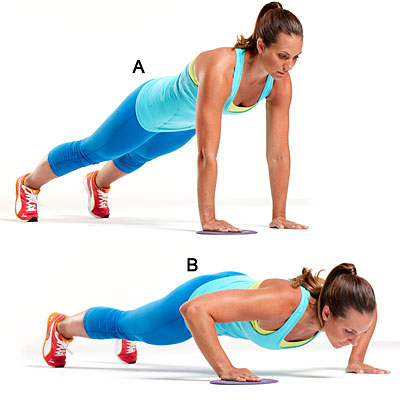
Clean Push ups. The push up is a pretty basic exercise, and one that most people have attempted at some point in their lives. It’s an exercise that has stuck around for a reason – it works. Push ups target the tricep muscle in your arm, although they also strengthen your pectorals, abdominals, quads and lower back, making it a great overall exercise.
 
To perform a basic push up:
  1. Lie face-down on the floor, keep your legs together and prop your feet up on your toes and the balls of your feet.
  2. Place your hands palms-down on the floor, approximately a shoulder width apart.
  3. Raise yourself up, using just the strength in your arms, until both arms are fully extended. Your body should be in a straight line from your head to your heels. This is the start and end position for the push up.
  4. Slowly lower your body to the ground until your elbows form a 90-degree angle. Inhale as you lower down.
  5. Slowly raise yourself back up into the extended arm position, exhaling as you do. You have now completed one repetition.
Variations: You can vary the basic push up exercise in a number of ways. If you’re just starting to build up strength in your arms, you can make the exercise slightly easier by keeping your knees on the ground throughout the exercise. You can also try a triangle push up, where your hands form a triangle with your forefingers and thumbs, directly below the breastbone.


Saturday, 26 July 2014

Ward off Alzheimer's by keeping your body & brain in shape

By Kimberly Garrison, Daily News Personal Fitness Columnist
 
A NEW STUDY has delivered compelling evidence that diet, exercise and other prescription-free interventions are the best way to ward off Alzheimer's disease.
 
Alzheimer's is perhaps the most dreadful of modern diseases: It steals your mind, your personality and your very soul. And once you have it, there is no turning back.
 
On a personal note, I have seen firsthand the slow, devastating effects of this awful disease on a loved one, as well as the family members.
 
So, my ears really perked up when I heard about the groundbreaking study that was presented at the Alzheimer's Association International Conference. It demonstrated that after only two years, individuals at risk for the disease who made dramatic lifestyle changes showed significant improvements.
 
According to the Finnish Geriatric Intervention Study to Prevent Cognitive Impairment and Disability study, lifestyle behaviors like exercise, a healthy diet and friendships staved off the cognitive declines that are common to Alzheimer's.
The two-year randomized study assessed more than 1,200 individuals at risk for Alzheimer's. While the control group received typical medical advice, the lifestyle makeover participants received extensive dietary, exercise, cognitive and social training, as well as training in management of metabolic and vascular risks.
The results of the lifestyle participants was nothing less than stunning and delivered benefits that no technology or medication to date can trump.
Here are some of the simple, though clearly impactful treatments:
* Nutritional counseling sessions with a focus on consuming more fruits, vegetables and fish.
* Initially, emphasis on weight training one to two times a week and cardiovascular training two to four times a week. Ultimately, participants were encouraged to continue with strength training and ramp up cardiovascular training to five to six days per week.
* Throughout the study, various cognitive training exercises were also provided to participants.
So, since there is no medical treatment to cure Alzheimer's once it occurs, prevention is our only hope. Lucky for us, prevention may be as near as the kitchen, the gym and woven into our personal relationships.


Thursday, 24 July 2014

DISCOVERING YOUR FITNESS POTENTIAL


The goal of fitness is getting yourself to your maximum physical potential. Consequently, you should be focused on pushing the limits of how far your body can go in terms of fitness. Unfortunately, lots of people focus more on the aesthetic part of fitness as opposed to the performance aspect. This leads to erroneous beliefs such as spot toning, and exercises which focus on a particular body part to the exclusion of others.
 
By working out every single part of the body, you will remain athletic and be able to put your muscles to good use. You will also look much better and not seem out of proportion.


Sunday, 20 July 2014

WORKOUT OF THE WEEK


Military-Fitness-TrainingEvery week, I formulate and test a total body workout to increase your arsenal of exercises. This week's workout is designed to work multiple muscle groups including your triceps, biceps, deltoids, trapezius, chest, hip flexors, abdominal, glutes(butt), quadriceps (thigh) and hamstrings.
 
The workout is designed to be executed in giant set fashion, you are meant to continue to the next workout with as little rest as possible.
 
  • Rowing Machine (row 5000m as fast as possible)
  • 25 Pull ups
  • 25 Tricep Dips
  • 4 sets of 10 Bench Presses
  • 4 Sets of 10 Goblet Squats
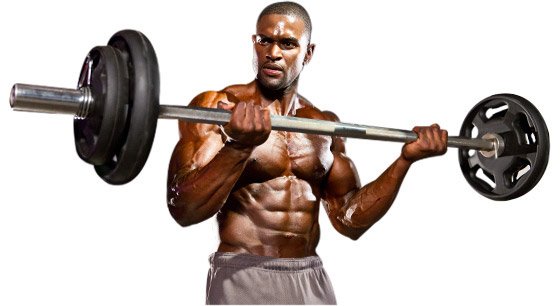
  • 4 sets of 10 Bicep Curls
  • 50 Ab rollouts, using an ab roller or a barbell
  • 50 Push ups
  • Stretch for 5 minutes
 
Ensure that you keep yourself hydrated throughout the workout and take some rest when you feel tired. The aim of the workout is to push you to your limits, not kill you.
 

Wednesday, 18 June 2014

THE WAYNE WAY: TRAIN LIKE THE DARK KNIGHT

I have always wondered how hard would Bruce Wayne have had to train to perform optimally in the batsuit, especially against physically and mentally superior foes such as Ras' al Ghul (don't get me started on Bane).
 
 
Bruce Wayne is a skilled gymnast and advanced martial artist. He is 6'1", 210 pounds, and somewhere between 35-43 years old.  Lets say he has 6% body fat, which means he has about 197 pounds of lean mass.
 
He starts his week with 30 minutes of meditation and runs 20 miles in 30 minutes. He then stretches for 30 minutes and spars for 30 minutes. He then proceeds to clean and jerk a 262lb barbell 24 times and finishes off with 50 pull ups.
 
Leave me alone Catwoman, I'm benching
 
 
On Monday, he executes 5 sets on a 20ft rope climb (helpful for building upper body strength to swing on those infernal grappling hooks). 84 high box jumps, 30 minutes on gymnastic rings, and 1 hour working the heavy bag and sparring gets him into combat shape.
 
chest exercises
 
On Tuesday, he cranks out 3 sets of 100 pushups, followed by bench pressing 8 sets of 30 reps with 360lbs. Then he tones his arms with 3 sets of 10 renegade rows. He finishes with 1 hour of Tai jutsu.
 
Wednesday is dedicated to meditation and weapons training. Bruce practises with the rattan, the bo staff, and the katana, fully understanding that he will have to do battle against Ras al' Gul, his arch nemesis. Weapons training strengthens the mind-body link, enabling him to respond quickly and efficiently to multiple martial art styles.
 
On Thursday, he prepares for the day by meditating for 30 minutes, before loading the bar for 3 sets of 8 barbell presses. He spends time on the ring perfecting his Maltese cross and muscle ups. He them cranks out preacher curls, supersetting with tricep kickbacks. He needs strong arms to lift heavy weights off people.
 
On Friday, Bruce trains his core by flipping heavy tractor tyres. He then swings a 30lb sledgehammer against the tyre. He then proceeds to slam down 1000lbs on the leg press (yeah, that's how he builds those phenomenal quads!).

Saturday, he stays in and watches TV, even Batman needs an off day. He calls Catwoman over for some 'mutual exercise'.

Now, thats how you build a superhero!


Saturday, 24 May 2014

5 SECRETS TO BUILDING A BIGGER BENCH

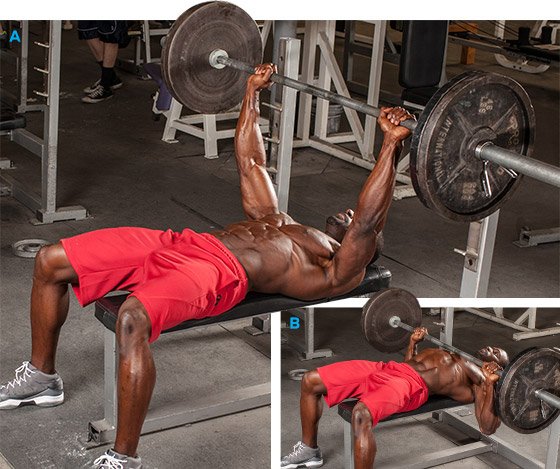
The barbell bench press remains the king of exercises, and the bigger your bench, the greater your bragging rights within the gym. Bodybuilders and people with physique-oriented goals know that a bigger bench equates to a larger, rounder, fuller chest as well as bigger shoulder and triceps muscles. Improving your bench press has the added benefit of building your mental muscle, as it requires a significant amount of fortitude to lift a wright capable of crushing you into the ground.


1. Accelerate
 
Compensatory acceleration training, or CAT, is lifting sub-maximal weight with maximal force, which teaches the nervous system how to recruit more muscle every time you lift. The speed creates the illusion that the weight is lighter than it really is, thus enabling your body to handle greater amounts of weight.
 
2. Add Dead Benches to your routine
 
A dead bench is done in a power rack with the weight resting on the pins set just above your chest. The weight starts at chest level—not in the arms-extended position—and is pressed up as explosively as possible. Because of this, you'll develop tremendous starting strength at the bottom of each rep. 
 
3. Do more sets with Fewer reps
 
Since you're training for a one-rep max, the first rep of every set is extremely important. Even when training with loads as light as 50 percent of max, most powerlifters keep the repetitions low, opting to do more sets to achieve volume when it's needed.
 
4. Build your Arms
You can't press huge weights with spindly arms. in order to avoid injury, you have to build your triceps and deltoids. However, don't forget the biceps because they help stabilize the joints (as an antagonist muscle to the triceps), and strong forearms help you squeeze the bar tightly. This will make the weight feel lighter in your hands.
 
5 Meditate
 
Few people realise that bodybuilders actually need to meditate. Your central nervous system isn't adept in differentiating between a real experience and an imagined one. Set some time aside every day to visualize blasting through maximal weights.
 
.


Wednesday, 21 May 2014

5 REASONS WHY YOU ARE NOT BUILDING MUSCLE

Here’s a question I see time and time again in online bodybuilding & fitness forums:
 
“Hi, I have been working out for X months and I have only gained Y pounds. I train hard and have been taking XYZ supplements. I can’t gain weight or get stronger! Please help!”
 
In most cases, after trying to gain weight for several months the person will quit. That’s a pity, because the only thing stopping the person from progressing is knowledge. Here are some reasons why many people do not build muscle:


1. You’re not getting enough calories
 
Most people are surprised at how many calories they need just for maintenance! Calorie consumption is the solution to about 90% of the complaints lifters have about not being about to get bigger and/or stronger.  Your body requires a certain number of calories to maintain your current weight. This figure is known as basal metabolic rate (BMR), and varies from person to person depending on your weight, muscle mass, activity level, age etc. If your calorie intake is lower than BMR, you will lose weight. This is known as a calorie deficit. If your daily calorie intake is higher than your BMR, you will gain weight.   You need to remain in a state of calorie surplus to retain and maintain muscle growth.
 
2. You’re not eating the right foods
 
Generally speaking, if you’re eating excess calories every day and training with a decent workout you’ll grow. But, if you’re not eating the right foods, the chances are that you’ll be limiting your potential, putting on excess body fat, and not growing enough lean muscle.
 
The best way to plan your muscle building diet is to split it up into protein/carbohydrate/fat (P/C/F) ratios. Arguably the best ratio of muscle growth is 30/50/20. This mean you’re getting 30% of your total calories from protein, 50% from carbohydrates and 20% from fats.
 
Now all you need to do is spread those amounts over 6-7 meals per day.
 
3. You’re not eating enough meals
 
When you eat is just as important as what you eat. The days of eating “3 square meals” are long gone. Research has shown that eating more smaller meals is not only great for promoting a fast metabolism, but helps maintain, lose, and gain weight. Think of your body like a log fire. If you put too much wood on at once, the fire burns slow and sluggish. But if you gradually add more wood as the fire gets bigger, it burns more efficiently and gets bigger.
 
You should be aiming for a minimum for 6 meals spread at even intervals throughout the day. You want to make these meals as even as possible, but it’s OK to eat a bit more at breakfast/lunch/dinner if you don’t have time during the other breaks.
 
So you’re probably thinking, “I don’t have time to eat all those meals”. If I had a dollar for every time I heard that I could retire. The truth is you can, it just requires a bit for forward planning. There are endless ways you can cook and store food for meals throughout the day. Spend a few hours on a Sunday afternoon cooking up your lunches and snacks for the week. Use your imagination and devise tasty and healthy meals to build up that muscle mass.
 
The other option is weight gain shakes. There’s nothing easier than banging some water into a shaker with some powder, having a shake, and drinking. Good meal replacement shakes usually contain around 600 calories with good amounts of protein, BCAAs, glutamine and carbohydrates. It’s literally a meal in a cup. All you need is a few shaker bottles, add the powder before work, then just add water and drink on the job. However, care must be taken not to overdose on shakes as extended overdoses may have negative effects on your kidneys and liver.
 
4. You’re not getting enough water
 
Water is nature’s wonder supplement, it’s essential for a whole host of bodily functions. Many lifters underestimate the importance of being hydrated well before they step into the gym. If you feel dehydrated just before you’re about to train, it’s too late, you won’t be able to rehydrate yourself time. Keeping yourself hydrated should be a priority from the moment you get out of bed. Dehydration is a serious problem, and in extreme cases can lead to death. Here are some signs of dehydration you should look out for:
  • Feeling thirsty (obviously)
  • Fatigue. Feeling tired for no apparent reason.
  • Dry mouth and possible sore throat
  • Headache
  • Loss of appetite
  • Dark urine with strong odor
Drinking an adequate amount of water is easy, and there’s no excuse why you cannot do it. Just take a bottle wherever you go and keep sipping out of it throughout the day. however take care not to drink excessive amounts of water as it may lead to iodine deficiencies, as well as other less desirable and potentially fatal conditions.
 
Some supplements, like creatine, may lead to dehydration. If you’re using creatine monohydrate you should increase the amount of water your consuming.

5. Your workout routine sucks

Choosing the right routine to suit your body type, training experience and goal is vital. Many new lifters get their workout routines from magazines and articles written by professional bodybuilders. These workouts are not designed for beginners, and will only lead to a lot of wasted time, energy and frustration.
 
A good workout routine needs the following:
 
  • Training days arranged to allow for adequate rest
  •  
  • Muscle groups arranged so overtraining does not occur.
  •  
  • Muscle groups arranged so that each muscle can be worked to maximum effect
  •  
  • A good selection of compound and isolation exercises
  •  
  • Good warm up and cool down
  •  
    (To be continued)


Tuesday, 20 May 2014

15 WEEKS BODY TRANSFORMATION - FREELETICS


When a man takes his destiny into his hands and proceeds to shape himself into whom he wants to be, he ceases to be a mere man, and approaches apotheosis. #LegallyMuscled bites

"A man is literally what he thinks, his character being the complete sum of all his thoughts."

"As the physically weak man can make himself strong by careful and patient training, so the man of weak thoughts, can make them strong by exercising himself in right thinking."


The Aphrodite workout is the beginners phase of the freeletics workout program. It is helpful if you perform it in a group with other trainees; this keeps you motivated when you start to hurt.


APHRODITE

Your first workout is called Aphrodite. It does not require equipment. There are no mandatory breaks. That means you are supposed to complete the workout without taking breaks - if possible. It is important to complete it in the exact same order as stated below and to work through it as fast as possible. Quitting is not an option.

WORKOUT STRUCTURE
5 Rounds Round 1 Round 2 Round 3 Round 4 Round 5
Burpees     50           40            30          20          10
Squats       50            40            30         20           10
Situps        50            40            30         20           10
BURPEES

Start: Start from a standing position. Knees, hips and shoulders are in a vertical line. Make sure to keep your core tight.

Movement: Make your chest touch the ground. Get back up (however you want to, not necessarily a strict push-up) and perform a jump – both feet have to leave the ground, knees, hips and shoulders have to be in a vertical line and the hands have to touch behind the head.

End: When your feet touch the ground again, one repetition is completed.

Modified version: If burpees are too difficult or become too difficult during the workout, do the modified version:

Move into the push-up position without touching the ground with your chest.

SQUATS

Start: Start from a standing position. Knees, hips and shoulders are in a vertical line.

Movement: Lower your hips below your knees.

End: Return to starting position to complete one repetition.

Additional remarks: Make sure to keep your weight on your heels, your chest up and your back flat. Push your knees out and keep your torso as vertical as possible.

Modified version: If squats are too difficult or become too difficult during the workout, do the modified version:

Lower your hips as far as you can instead of lowering them below your knees.

SITUPS

Start: Start from a sitting position. Both of your hands touch the ground in front of your feet.


Movement: Move your torso downwards and touch the ground behind your head with both hands.

End: Return to starting position to complete one repetition.

Additional remarks: Your butt may never leave the ground. Make sure too keep your core tight.

Modified version: If situps are too difficult or become too difficult during the workout, do the modified version: Touch your knees instead of the ground in front of your feet.

WORKLOAD
In general, we recommend you to train Freeletics at least four times per week. Since this is your first week, three times is fine as well.
Freeletics is really tough, especially at the beginning. Workout times exceeding an hour are totally normal. Also, don’t be discouraged if you can’t make the workload from day one. It is all part of the process. You will improve much faster than you think.

Your fastest time is called personal best (PB). If you complete a workout without a single modified repetition, the workout time receives a star (*). Star times are always ranked before workout times without a star, even if they are slower.

We recommend you to warm-up before every training session and to stretch afterwards. Jogging, jumping jacks, arm circles, light stretching and the like are suitable to warm-up.

Please take a picture of your body before you train Freeletics the first time. Take a new one every ten days. Pictures are important to evaluate physical changes. Since you only change a little every day, you will not be able to track your progress properly without pictures.

Have fun in your first week as Free Athletes!

Freeletics Instructor Team


Saturday, 17 May 2014

CAN TOO MUCH CARDIO MAKE YOU FAT?

Culled from fitness bloggers
 
So, everyone who reads my blog knows that I love to exercise. I suppose you could say I am a little addicted. I can’t live without it. But that isn’t such a bad thing right? What’s wrong with keeping yourself active and healthy? However, I was surprised to find that too much exercise can actually be a bad thing for those of us who exercise for weight loss. That’s because too much exercise can actually cause our bodies to store fat rather than burn it.
 
mountain-climbers
 
A recent study showed that too much cardiovascular exercise at too high an intensity can cause the body to become depleted and worn down and this can actually slow the body’s metabolism as we go into survival mode. This means that our bodies will try to hold on to our fat stores rather than burn them. In such situations its not uncommon to actually lose muscle and preserve fat. Not what we want!
 
biggest-loser-fat-loss

So how can we ensure that we are exercsiing in a way that will ensure we burn fat not muscle?
 
1. Firstlly make sure that you enjoy exercise. Keep the workouts at a level that ensures you still enjoy what you’re doing. If you work so hard that you begin to totally dread every new workout and feel drained, chances are you are doing too much. It doesn’t have to be pure agony for you to derive benefit.
 
2. Make sure that you add resistance training to your workout regime at least twice a week. Too much cardio and not enough resistance can cause your body to stop burning fat effectively. This can be in the form or weights or just by using body weight exercises. Using our muscles and building them ensures that we don’t lose muscle.
 
3. Try to reduce cardio if you are pushing yourself too much. 2-3 cardio workouts a week of 30-45 minutes at moderate to high intensity is sufficient for most people.
 
4. Try using intervals as a way of breaking up your workouts. You can speed up your metabolism and burn fat whilst spending less time exercising. Replace long runs on the treadmill with short 15 minute interval circuits to help boost your metabolism.
 
5. Ensure that you get plenty of sleep. This helps your body to repair and recover from the day’s stresses and strains. Look at ways to reduce your stress if you have trouble sleeping.
 
6. Eat a healthy balanced diet and don’t cut out food groups or starve yourself. Sensible eating and portion control ensure that you eat a balanced diet that will give you all the energy your body needs.

Friday, 16 May 2014

FROM VAMPIRE TO DEMIGOD: KELLAN LUTZ'S HERCULEAN TRANSFORMATION


"I [have] always loved Hercules, He-Man, Tarzan—all those epic, classic heroes. Now that I get to bring Hercules to life, my spirit is on fire".
Demigod!!
 
He may be best known for his role as Emmett Cullen in the "Twilight Saga" film series, but Kellan Lutz has moved past the vampire gig and stepped into the shoes of a demigod. Given his love for heroes, Lutz seems like a natural choice to play the son of Zeus.
 
Lutz only had two weeks to prepare for filming and precious little equipment, "I didn't have a lot of time, so I had to multitask and work multiple muscles at once."  He focused less on mass and more on athletics and aesthetics, using cardio, resistance training, and creativity to build a body worthy of his character.


"When I'm working out, I try to make it competitive," he says. "I make up challenges. I need it to be a game."The treadmill circuit below is an example of how Lutz used limited equipment to great effect.
 
Treadmill Circuit: 3 Rounds, raising incline and speed every two minutes
Running, Treadmill Running, Treadmill Running, Treadmill 2 minutes    
Dips Dips Dips (Using Treadmill) 20 reps
 
Upper-Body Circuit: 3 Rounds
 
Seated Side Lateral Raise Seated Side Lateral Raise  Side Lateral Raise (Shown w/ Dumbbells) 20 reps
Decline Push-Up Decline Push-Up Decline Push-Up 20 reps
Leverage Incline Chest Press Leverage Incline Chest Press Machine Incline Chest Press (20 reps)
Decline Push-Up Decline Push-Up Decline Push-Up (20 reps)
Machine Bench Press Machine Bench Press Machine Bench Press (20 reps)
Decline Push-Up Decline Push-Up Decline Push-Up (20 reps)
 
Not only is the circuit challenging, but it's fun and fast-paced, which helps Lutz enjoy the workload. "At the end of the day, I don't want my time in the gym to be a workout," Lutz says. "I want to have a good time. I don't want to be watching the clock the whole time; I want to look up and think, "Oh my God, I've been here for two hours."


Wednesday, 30 April 2014

5 LAWS OF THE COVER MODEL BODY

culled from Bodybuilding.com
 
For many people, rock-hard six-packs and stunning V-tapers exist only in their wildest fantasies. They think that the ultra-fit models on the covers of magazines are one in a gazillion, and there's no way a normal person with a full-time job and crazy responsibilities outside the gym could ever hope to look like that.
 
This attitude, while pervasive, is B.S.
 
Have you ever been to a fitness expo or physique competition like the Arnold Sports Festival? Have you ever noticed something about the people who gather there? The vast majority of them are fit! In an exposition full of lean, muscular people, the doubters who think fitness is only for the elite few may change their tune.
 
If so many other people can do it, why can't I?
 
It's true that most super-fit people have dedicated at least a part of their lives to the pursuit of health and fitness. Fitness takes time, it takes dedication, and it takes a hell of a lot of hard work. But you know what? No matter your story, your background, or your lifestyle, you have the ability to change for the better.
 
If you're ready to go from covering up your body to being the cover model of your own life story, follow these simple rules:

Push Your Limits To The Limit

James Grage, the co-founder and vice president of BPI Sports, explains that the most essential aspect of changing your body is to train past your comfort zone. 
 
"Most people want to quit when their muscles start to burn or shake with fatigue. Instead of viewing this as the 'downside' of training, reframe your mind and tell yourself that this pain is exactly what you're chasing. You want the burn; you want the discomfort. That's what will enact change in your body."
 
"People want to quit when their muscles start to burn or shake with fatigue. You want the burn; you want the discomfort. It enacts change in your body."
Training hard and with intensity doesn't have to mean spending hours in the gym. Whitney Reid, fitness model and BPI Sport's East Coast Sales Manager, says that pushing it in the gym means you're making your workouts count.
 
"How many people do you see in the gym spending half of their workout on the phone? Get in the gym, put the phone down, and train hard for 40 minutes. You should be completely exhausted when you're done."
 
Just going to the gym isn't enough. Don't cheat yourself by being mentally lazy.

Follow The 90/10 Nutrition Rule

Your nutrition plan is almost more important than your training program, so it needs to be the priority in your healthy lifestyle. However, nutrition doesn't have to be a huge burden.
"Bring Tupperware to work or look at online menus so you know what to order if you go out for a business lunch."
"The biggest stumbling block with nutrition is typically a lack of planning and scheduling. When you're unprepared and hungry, you'll eat whatever is convenient. Plan your meals in advance," says James.
 
If you don't have the time or inclination to prepare all of your meals for the next week, that's OK, but you should plan for your schedule. Cook extra dinner and bring Tupperware to work or look at online menus so you know what to order if you go out for a business lunch.
 
"Setting an extremely strict meal plan and training schedule is great if you don't have a life," says Whitney. "But I travel 10 days or more every month for work so I have to be very flexible with my training and my nutrition. I don't like traveling with 20 Tupperware containers, and I don't really have time to worry about that, so I like to find decent places to eat."
 
Restaurants will be able to adjust their recipes to fit your nutrition needs. Request your chicken breast without sauce or your vegetables steamed without butter.
 
"You have to be able to make adjustments," says James. "If I'm going out to dinner at night, I'm typically a little stricter earlier in the day. If I'm eating clean and healthy 90 percent of the time, then the other 10 percent I don't have to be perfect. "
 
Sound Recovery Takes A Little Work
 

Don't let your fitness resolutions become another statistic. Create a solid game plan with these powerful tools and head into the New Year prepared for battle.

Training should be an important part of your life, but you won't see results if you don't allow your body to rest. It's easy to get excited about your program and want to train 24/7, especially if you're seeing awesome changes. But don't forget that your muscles can't grow unless they're able to recover.
 
Schedule your training regimen to include at least one rest day. Along with allowing your muscles to recover, rest days can be crucial to your mental health and your relationships with other people. 
 
Enjoy your days away from the gym. Concentrate on other things that make you happy so you can maintain balance in your life. Remember, this is no "health kick." You're changing your lifestyle entirely so you can stay fit for the long haul, not just for a few months.
 
A lifestyle change means you need to have a plan that you know you can stick with. Rest days are an important part of that plan.

Supplements Matter

Supplements are an important part of a fitness regimen. They're like the icing on the proverbial cake. If every other aspect of your cake is great, the icing will set it apart.
 
"I like supplements for multiple reasons," says James. "If I'm eating right, supplements keep me accountable to my training plan. It's a simple thing you can do each day to 'initiate' the sequence on your daily fitness process." By making supplementation a part of your nutrition plan, you'll be more likely to stick to both aspects of your fitness regimen.
 

"The other reason I like supplements is the way they make me feel," James says. "When I take a capsule of fat burner in the morning, it primes my system for burning fat, but it also gives me great energy. I'm able to go in and train at my peak level. I really enjoy that extra focus and energy that I get." You can't expect your supplements to make changes for you—they just won't. They can bring out the best in your training and nutrition so you can uncover your best body.

Personalize Your Motivation

Wanting a better body can only get you so far. The "want" has to be bolstered by a meaningful, specific goal. "Once you have an image in your mind of what you want to achieve, then you need to test the strength of that goal by exploring its meaning," says James.
 
"If your goal doesn't have enough personal meaning, then it's never going to give you the long-term motivation you need to create change."
"There's a difference between enthusiasm and motivation. Enthusiasm may come easier, but it's fleeting. Motivation will have your back for the long haul."
If you want a better body, it's important to analyze why. Is it for your growing gut? Is it so you look better naked? Is it to live a longer, richer, healthier life? The reason for your goal should come from beyond the superficial. That way, it's strong enough for you to use for consistent motivation. 
 
"Remember," says James, "a great physique isn't built overnight. It requires consistency and diligence. I always remind people that there's a difference between enthusiasm and motivation. Enthusiasm may come easier, but it's fleeting. Enthusiasm is going to leave you hanging after a few weeks. Motivation will have your back for the long haul."
 

Saturday, 19 January 2013

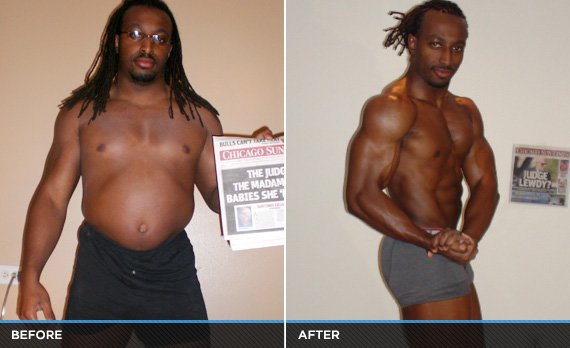
WHO CAN YOU BECOME IN 12 WEEKS??


A 12 week transformation ( Yes, Its the same guy)


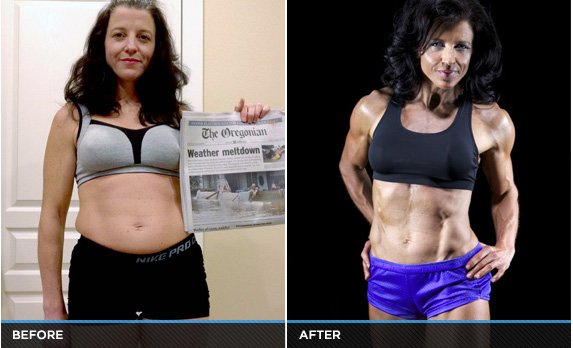
These are the experiences of people who took charge and decided to change their body to fit their desires.
After transforming my body through 12 weeks of show prep, the physical and mental results were something I knew I didn't want to live without ever again. Living fit allows me to set goals, both big and small. Working toward goals every day fuels my passion......

 Living fit drives and keeps me convinced that this is the right way to live because of the balance and structure it provides. Working out and eating clean energizes me, keeps my mind clear, and allows me to stay focused in all aspects of my life. Of course, I have days where this isn't the case, but overall, fitness has greatly improved my quality of life. It has made me a better mother, wife, friend, and person. We're all busy people with obligations and responsibilities outside of the gym. Finding balance is important; with all that goes on in my life with kids, training, college classes, etc., having balance allows me to enjoy the journey. It is truly rewarding. 

My view of myself definitely changed. I realized I have an incredible amount of determination and drive inside of me. I never knew it existed. I figure, I'm just a regular dude, so if it it's inside of me, then it's inside of everyone.

..So whats your excuse


Friday, 24 August 2012

5 ways to boost your sex life


1. KEEP THE MAKEUP ON

"I bet when you first got together with your man you made love with your make-up on." says Val Sampson, author of "How to Have Great Sex for The Rest of Your Life".

"After a while this gets replaced with taking all your makeup off, brushing your hair and slipping into your nightgrown. Try to initiate sex when you're still dolled up. It will rekindle those exciting first-time feelings." And the more gorgeous you feel, the more confident and relaxed you'll be.

2.  BUY TRAINERS 

Thirty minutes a day of moderate exercise can help to increase sex drive, say researchers. It's not just the extra energy that will help get you in the mood; if you feel more confident about your body, you'll also feel sexier.

3. GET CREATIVE

Be experimental with your sexual practices as boredom often results in a loss of sex drive.  Try some new things like having sex in remote locations or being more spontaneous. This can create interest and gives intense pleasure.
Be experimental with your sexual practices. Boredom can often result in a loss of sex drive. Try some new things like having sex in remote locations or using some toys. This can create interest and give you an element of interest that might have been missing.

Thursday, 5 July 2012

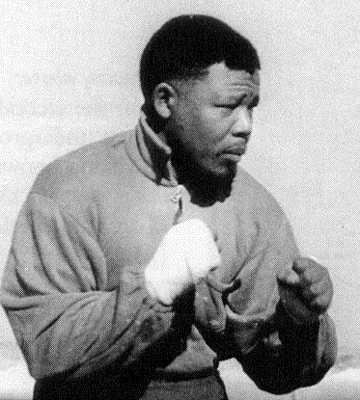
THE MANDELA WORKOUT

A Freedom Fighter to the bone


Mandela spent his entire life fighting for freedom.

Whether it was representing non-whites that no one else would in court, or organizing protests from within the confines of solitary confinement, he never stopped at “good enough.”

He fought, and fought, and fought some more. He never gave up on his quest for freedom.

I'm currently reading Nelson Mandela’s autobiography, Long Walk to Freedom. At a whopping 656 pages, it's taking me almost two weeks to read! Yet every chapter is utterly compelling, painting a portrait of a man who was unwavering in following a passion that most thought impossible to achieve.

On reading his autobiography, I was struck by just how much attention he has paid to his fitness.
Here are a few quotes I pulled out:

I enjoyed the discipline and solitariness of long-distance running, which allowed me to escape from the hurly-burly of school life.”

“On Monday through Thursday, I would do stationary running in my cell in the morning for up to forty-five minutes. I would also perform one hundred fingertip push-ups, two hundred sit-ups, fifty deep knee-bends, and various other calisthenics.
“Exercise was unusual for African men of my age and generation… I know that some of my younger comrades looked at me and said to themselves, ‘if that old man can do it, why can’t I?’ They too began to exercise.”

“I attended the gym for one and a half hours each evening from Monday through Thursday… We did an hour of exercise, some combination of roadwork, skipping rope, calisthenics, or shadow boxing, followed by fifteen minutes of body work, some weight lifting, and then sparring.”

I was deeply touched by the following paragraph.

" I have always believed that exercise is a key not only to physical health, but to peace of mind. Many times in the old days I unleashed my anger on and frustration on a punch bag rather than taking it out on a comrade or even a policeman. Exercise dissipates tension, and tension is the enemy of serenity. I found that I worked better and thought more clearly when I was in good physical condition, and so training became one of the inflexible discipllines of my life. In prison, having an out let for my frustrations was absolutely essential.

Even on the Island, I attempted to follow my old boxing routine of doing roadwork and muscle building from Monday to Thursday and then resting for the next three days. on Mondays to Thursdays I would run on the spot in my cell in the morning for up to forty five minutes. I would perform a hundred fingertip push ups, two hundred sit ups, fifty deep knee bends and various other calisthenics."

I don't think I could have said it better myself; no wonder the man remains so trim and active at 93!