Total Pageviews

Showing posts with label diet. Show all posts

Thursday, 24 July 2014

DISCOVERING YOUR FITNESS POTENTIAL


The goal of fitness is getting yourself to your maximum physical potential. Consequently, you should be focused on pushing the limits of how far your body can go in terms of fitness. Unfortunately, lots of people focus more on the aesthetic part of fitness as opposed to the performance aspect. This leads to erroneous beliefs such as spot toning, and exercises which focus on a particular body part to the exclusion of others.
 
By working out every single part of the body, you will remain athletic and be able to put your muscles to good use. You will also look much better and not seem out of proportion.


Friday, 16 May 2014

FROM VAMPIRE TO DEMIGOD: KELLAN LUTZ'S HERCULEAN TRANSFORMATION


"I [have] always loved Hercules, He-Man, Tarzan—all those epic, classic heroes. Now that I get to bring Hercules to life, my spirit is on fire".
Demigod!!
 
He may be best known for his role as Emmett Cullen in the "Twilight Saga" film series, but Kellan Lutz has moved past the vampire gig and stepped into the shoes of a demigod. Given his love for heroes, Lutz seems like a natural choice to play the son of Zeus.
 
Lutz only had two weeks to prepare for filming and precious little equipment, "I didn't have a lot of time, so I had to multitask and work multiple muscles at once."  He focused less on mass and more on athletics and aesthetics, using cardio, resistance training, and creativity to build a body worthy of his character.


"When I'm working out, I try to make it competitive," he says. "I make up challenges. I need it to be a game."The treadmill circuit below is an example of how Lutz used limited equipment to great effect.
 
Treadmill Circuit: 3 Rounds, raising incline and speed every two minutes
Running, Treadmill Running, Treadmill Running, Treadmill 2 minutes    
Dips Dips Dips (Using Treadmill) 20 reps
 
Upper-Body Circuit: 3 Rounds
 
Seated Side Lateral Raise Seated Side Lateral Raise  Side Lateral Raise (Shown w/ Dumbbells) 20 reps
Decline Push-Up Decline Push-Up Decline Push-Up 20 reps
Leverage Incline Chest Press Leverage Incline Chest Press Machine Incline Chest Press (20 reps)
Decline Push-Up Decline Push-Up Decline Push-Up (20 reps)
Machine Bench Press Machine Bench Press Machine Bench Press (20 reps)
Decline Push-Up Decline Push-Up Decline Push-Up (20 reps)
 
Not only is the circuit challenging, but it's fun and fast-paced, which helps Lutz enjoy the workload. "At the end of the day, I don't want my time in the gym to be a workout," Lutz says. "I want to have a good time. I don't want to be watching the clock the whole time; I want to look up and think, "Oh my God, I've been here for two hours."


Tuesday, 13 May 2014

HOW TO EAT FOR MAXIMUM GROWTH

You're a well-informed workout buff, so when science suggests one of your trusty training principles is ineffective, your head spins. But don’t worry—we’ve cleared up seven of the top fitness myths circulating the sweaty air of your local gym.Mejores ejercicios para bajar la panza http://zeropanza.com
The 12 most-effective muscle builders on the planet.
12 Moves To Power Up Your Workout


You need to eat to grow, bla bla bla ....yeah we all know that!!!

The problem is, how do I fit 5-6 meals a day into my busy schedule. Add to this the difficulty in finding healthy food around my office and the cost of eating that many meals per day  and you will get a picture of how hard it is to eat enough to maintain my body weight, talk less increase mass.

Having suffered through this conundrum for the past few months, I experimented with different food sources to determine which foods would help me generate the greatest amount of mass in the quickest time.
 
This post is the outcome of my experiments; please feel free to try this at home :).
 
12. Nutella ShakeMorning: I mixed up a muscle shake made up on 2 cups of raw oatmeal, 20cl of milk, 1 banana, 1 avocado, 4 egg whites, 3 tbsp Peanut butter and 3 teaspoons of honey for taste. Blend these ingredients together and drink it up at once. without pausing for breath. This shake represents a balanced diet of carbohydrates, proteins, fats and oils, fibre and water and it should keep hunger at bay for the next few hours at least.


20 Foods That Keep You Young
Breakfast: This needs to be quick because you'll be rushing out the door as you chomp. I rustled up a  sandwich from wheat bread, lots of peanut butter and boiled eggs. I wash this down with a mug of  chocolate, and I'm good to start the day.

When you’re on a high-protein diet, you need healthy chicken breast recipes. Here's one you can handle—and it tastes good too.Lunch: I'm normally at the office at this time, so I quickly order a plate of white/jollof/fried rice with beef/chicken and plantains. I usually eat whilst working, so I avoid any foods that are liable to stain.

Pre-Workout: I usually get back from work by about 7pm and immediately get ready to hit the gym. I usually would grab anything I found in the fridge e.g a banana, apple, biscuit.  However, I recently discovered a phenomenal pre workout meal in 'gari' (coarse ground cassava flour), soaked in water, generously sprinkled with peanuts. I also add milk to increase the protein content. The high carbohydrate content gives me that 'kick' needed to move my weight lifting to the next level.

Dinner: This is usually eba/pounded yam with any soup available at the time. The meat contained in the soup/stew (however you all it) provides protein, whilst the eba is pure carbs. On a workout day however, I usually dine on a plate of beans. This source of pure protein helps rebuild the muscles destroyed during the course of training, helping me develop maximum muscle in minimum time.

Eba (Cassava Flour) with Vegetable StewDishing : Cowpeas Curry / Black Eyed peas Curry / Lobia Curry


Wednesday, 23 October 2013

STYLE IN FITNESS: THE ROLE OF MASS MEDIA IN FITNESS


Bodybuilding is an art form, and I have always held the opinion that a person's physical structure should be aesthetically pleasing, whilst retaining functionality. I have found that the kind of body developed by individuals has changed over the years in line with the kind of physical structure favoured by the media. However, I have realised that there are a lot of people out there who like training, working out, and even like competing, but who don't want to look like the modern bodybuilder. 
The Modern Man


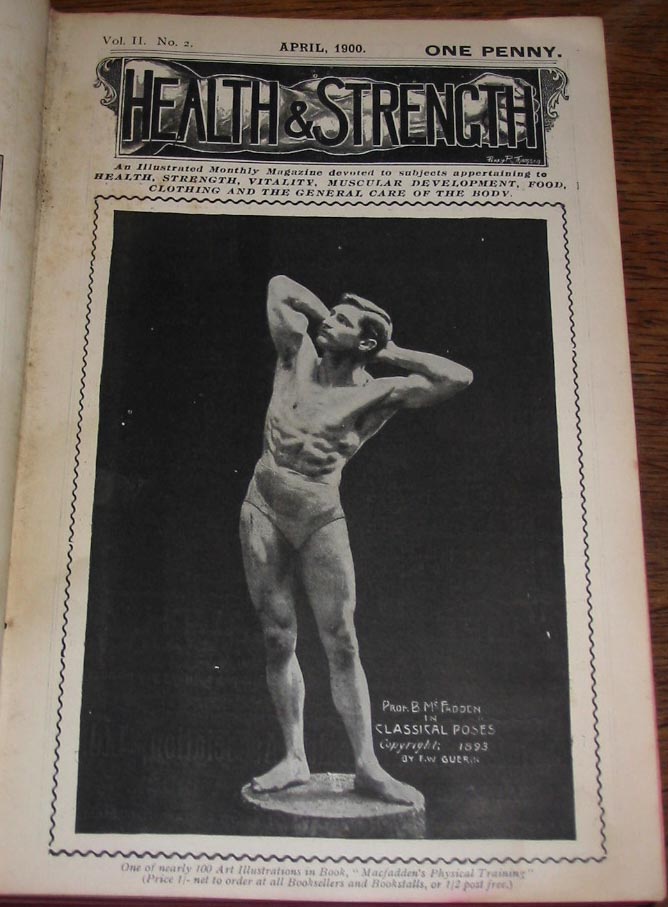
In the period between 1890 to 1920, when bodybuilding was still called 'physical culture' emphasis was placed on a practitioner's ability to perform magnificent feats of strength whilst looking presentable in suits, which were the everyday clothes worn at the time. Thus his training was focused on lifting consistently heavy weights and performing gymnastic and calisthenic exercises. A lean, muscular and strong physique was favoured, and definition and symmetry was not particularly required in competitions, leading to the rather rough edged bodies of the time. 
 

In writing this article, I had recourse to Health and Strength magazine, one of the oldest fitness publications, reaching back as far as 1876 as well as Mens Health, Flex and other fitness material.


With the period between 1925 and 1950, the aesthetic seemed to have changed due to the increased acceptance of fitness, the advent of fitness competitions and increased magazine distribution, requiring bodybuilders to develop more visually pleasing bodies as well as a bulkier physique.  Definition, symmetry and cleaner lines were prized at this time, and emphasis on strength  was reduced in order to appeal to the general public.  

Women started to participate in fitness competitions as feminism gained more adherents and women became increadingly encouraged to take control of their destinies. This led to fitness publications featuring more female models, presumably because women clad in skimpy outfits may have sold more magazines. Female fitness models were expected to retain their femininity have broad shoulders, flat stomachs and tiny waists.


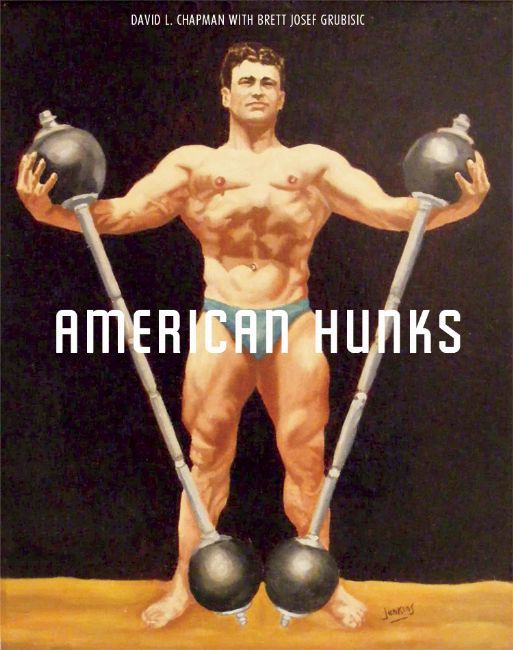
I believe something went wrong between 1950 and 1960, especially with the increased proliferation of the television and the development of broadcast media as a competitor to print media. It seemed like the media was trying to define how a bodybuilder should look. There was a conflict between the way print media believed an accomplished bodybuilder should look, and this influenced the governing aesthetic.  As you can see in the magazine covers below, the model on the left is far slimmer and more defined than the model on the right. A bulkier, less defined physique with broad shoulders and slim arms was preferred in the 50's and you can see this in the way movie stars of the day were built.

 At this time, it seems that female fitness was de-emphasised, as female models seemed to appear only on precious few covers. It should be noted that the Miss World (1951) and Miss Universe (1952) pageants commenced within this time and it is possible that public opinion may have required that emphasis be placed on female beauty, as opposed to athletic ability. The rise of beauty pageants possibly led to the rise of the 'burn fat!!!' movement and the portrayal of the thin woman as 'beautiful'.  
 

Happily, the conflict of the 50's gave way to a resurgence of enlightened bodybuilding between 1960 and 1969, probably due to increased education about nutrition and innovations in training equipment which enabled bodybuilders train with improved effectiveness and recieve quicker resultsHowever, this aesthetic changed with the rise of the Mr. Olympia and media preference for larger than life bodybuilders. Between 1970 and 1990 the increasing use of steroids and supplements by bodybuilders led to the evolution of the superhuman bodybuilder. There was also a resurgence of interest in female fitness, although the reappearance of women on magazine covers was more of an exploitation of their sexuality than an affirmation of their place within the fitness world.

From 1970, increased emphasis has been placed on muscle size and definition, leading to the prominence of the 'six-pack' as evidence of fitness. Innovations in training methodology also enabled the development of finely defined physiques. 

The rise of the internet and the explosion of fitness websites and enhanced information about fitness has led to the growth of a movement towards individual fitness. Ordinary people are becoming increasingly aware of their ability to change their bodies and improve their quality of life