Total Pageviews

Showing posts with label deadlift. Show all posts

Monday, 28 July 2014

LOSE THOSE FLABBY ARMS!!! Part 1

They have many names, but they are best known as 'Christian mother' arms. Flabby triceps have been a bother to many women for centuries, irrespective of race. These arms have caused lots of embarrassment to individuals and with time, can affect a persons confidence.
 
Side plank reverse fly. This is a great exercise for building overall upper body strength. Although it doesn’t target the arms specifically, it will help build the necessary strength to do other arm-specific exercises. It is also fantastic for the oblique muscles along your side.
 
To perform the side plank reverse fly:
  1. Lie down on your side on the floor and prop yourself up with either your hand or elbow. The elbow is an easier option for beginners.
  2. Stack your feet one on top of the other and lift your hips off the floor so that your body form a diagonal line.
  3. With your free hand, grab a dumbbell and extend your arm straight up, keeping it in line with your shoulder.
  4. Slowly lower the dumbbell in front of you, until your arm is perpendicular to your body.
  5. Slowly raise the dumbbell back up, forming a “T” shape with your arm and the dumbbell. You have now completed one repetition.
Variations: Instead of stopping when the dumbbell is perpendicular with your body, you can keep going, rotating your body and twisting the dumbbell underneath, before returning to the starting position.
 
Clean Push ups. The push up is a pretty basic exercise, and one that most people have attempted at some point in their lives. It’s an exercise that has stuck around for a reason – it works. Push ups target the tricep muscle in your arm, although they also strengthen your pectorals, abdominals, quads and lower back, making it a great overall exercise.
 
To perform a basic push up:
  1. Lie face-down on the floor, keep your legs together and prop your feet up on your toes and the balls of your feet.
  2. Place your hands palms-down on the floor, approximately a shoulder width apart.
  3. Raise yourself up, using just the strength in your arms, until both arms are fully extended. Your body should be in a straight line from your head to your heels. This is the start and end position for the push up.
  4. Slowly lower your body to the ground until your elbows form a 90-degree angle. Inhale as you lower down.
  5. Slowly raise yourself back up into the extended arm position, exhaling as you do. You have now completed one repetition.
Variations: You can vary the basic push up exercise in a number of ways. If you’re just starting to build up strength in your arms, you can make the exercise slightly easier by keeping your knees on the ground throughout the exercise. You can also try a triangle push up, where your hands form a triangle with your forefingers and thumbs, directly below the breastbone.


Friday, 6 June 2014

HOW TO MAKE YOUR OWN WEIGHTS

It sometimes happens that you want to train, but can't find any weights within a mile from your location; or you just dont want to pay those high gym subsrciption fees. In such situations, it helps to be ble to build weights for yourself using readily available and inexpensive material. In this article I will discuss 3 ways to improvise and build your own weights.
 
1. Milk Gallon Dumbells: Take 2 one gallon (or 5 litre) plastic milk jugs/oil jugs/water jugs and fill them with sand or water. This should give you about 5kg of weight. Use them to perform each exercise to failure i.e till your muscles cannot perform another rep. Milk jugs can also be used like kettlebells, providing you with the benefit of a kettlebell workout, without the attendant cost.
 
You can take this exercise to the next level by creating heavy weights for deadlifts and squats with 25 or 50 litre cans. This will provide you with fantastic gains at a fraction of the cost of maintaining a gym subscription.
 
Work It
 
 
2. Concrete Dumbells: I started out with these and I'm a big advocate of this inexpensive fitness option. You can make your own crude weights using just cement, gravel, toilet paper/paper towel rolls, and a bucket.
  • Place the cardboard roll in the center of the bucket, and pour the mixed concrete into the bucket. The granite increases the weight.
  •  
  • Once the concrete has dried, cut the bucket off and you now have a weight disc to put on your barbell.
  •  
  • Cover the concrete with epoxy paint to prevent it from cracking, and make as many as you want.
Alter the thickness of the concrete and the size of the bucket to change the weight of the disc. To determine how much each weighs, place it on a scale once it has dried. You can make some pretty heavy weights for the cost of a couple of concrete bags.
 
for_making_of_homemade_weights_out_of_concrete_we_will_ne_7


 Sandbag Weights: To do this you need the following, Empty rice or sugar shipping sack (the local supermarkets sell them, they are like potato sacks), Sand, Duct tape, Rope, an old duffel bag (optional).
Steps:

1.  Fill the sacks with sand until desired weight is reached. (use a bucket so that you can fill to the top and have an equal distribution of sand in both sacks).
2. Tie a loop at the top of the sack.
3. Use the rope to tie and secure the loop so it doesn’t open
4. Reinforce the bottom and sides of the sack with duck tape
And that is all, rinse and repeat to make as many weights as you want.
 

Tuesday, 6 May 2014

SHOCK THERAPY 2: LEGS OF STEEL

I hate Leg training, but I know that if I don't train my legs as hard as possible, I'll have a fantastic upper body and spindly legs.
 
This workout starts with Heavy Volume Sumo Deadlifts. Sumo deadlifts incorporate your legs and your back. Stop each set when you can't exert anymore, or when you feel like that next rep might put you in a precarious position to injure yourself. Put the bar down and take your rest, and then resume the attack.
 
Hamstring exercise   Sumo deadliftSumo deadlift
 
You have to perform 100 heavy reps in as few sets as possible. This of course implies that you may have to go easy on the weight, lifting only as much weight as your body can handle for such an extreme repetition range.
 
Leg Press. My fav Excercise that i do at the gym.
easy
Leg press... Jay Cutler
Hard

 
Heavy Leg Press
 
After exhausting your lower body with the deadlifts, move over to the leg press machine and crank out 100 heavy reps, using as much weight as you can manage. Start with the heaviest load you can take and reduce the weight when you can't do one more rep at the set level.
 
 
the proper way to lunge and make sure you use your butt to do itLunges with Dumbbells
 
Weighted Lunges
 
At this point, your legs must be shaking, but it's not over yet. Your next action is to pick up the heavy dumbells and crank out some weighted lunges. Your aim should be to deliver 100 repetitions per side. This exercise hits the quadriceps, calves and hamstrings at once.
 
Squat jump
 
Bodyweight Squat Jumps.
 
The Squat Jump works your lower body and burns major calories. squat jumps offer a new take on the traditional — one that you're definitely going to feel in your quads and your deep glutes. Stand with your feet shoulder width apart and slightly turned out, arms resting on your hips. Bend your knees and pliĆ©, then jump up explosively. Keep your core engaged. Land with control, lowering your body back into the squat position to complete one rep. Do 50 reps.
 
The End Result? See for yourself.
 
You 'Mirin?


Wednesday, 23 October 2013

STYLE IN FITNESS: THE ROLE OF MASS MEDIA IN FITNESS


Bodybuilding is an art form, and I have always held the opinion that a person's physical structure should be aesthetically pleasing, whilst retaining functionality. I have found that the kind of body developed by individuals has changed over the years in line with the kind of physical structure favoured by the media. However, I have realised that there are a lot of people out there who like training, working out, and even like competing, but who don't want to look like the modern bodybuilder. 
The Modern Man


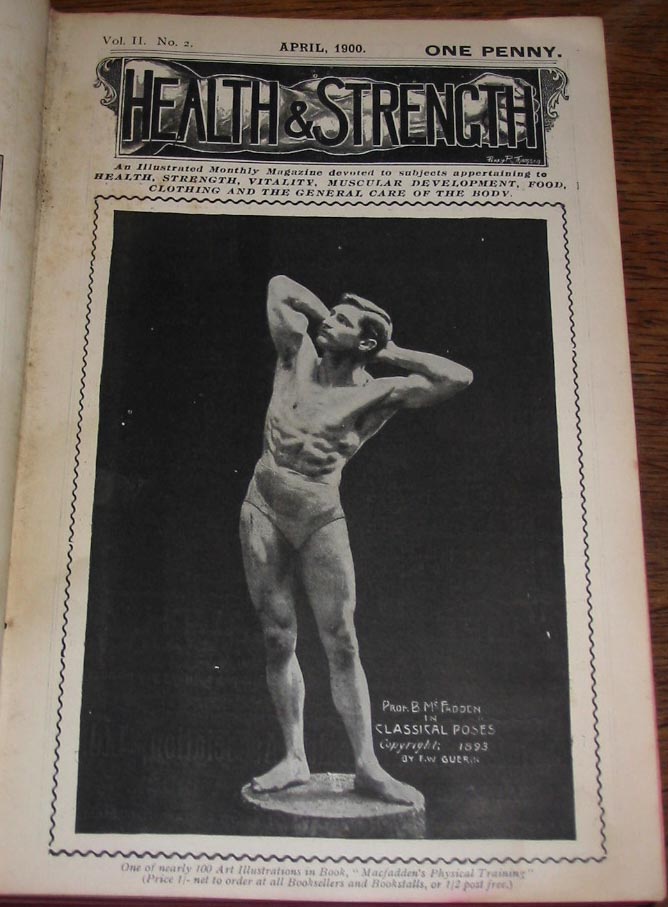
In the period between 1890 to 1920, when bodybuilding was still called 'physical culture' emphasis was placed on a practitioner's ability to perform magnificent feats of strength whilst looking presentable in suits, which were the everyday clothes worn at the time. Thus his training was focused on lifting consistently heavy weights and performing gymnastic and calisthenic exercises. A lean, muscular and strong physique was favoured, and definition and symmetry was not particularly required in competitions, leading to the rather rough edged bodies of the time. 
 

In writing this article, I had recourse to Health and Strength magazine, one of the oldest fitness publications, reaching back as far as 1876 as well as Mens Health, Flex and other fitness material.


With the period between 1925 and 1950, the aesthetic seemed to have changed due to the increased acceptance of fitness, the advent of fitness competitions and increased magazine distribution, requiring bodybuilders to develop more visually pleasing bodies as well as a bulkier physique.  Definition, symmetry and cleaner lines were prized at this time, and emphasis on strength  was reduced in order to appeal to the general public.  

Women started to participate in fitness competitions as feminism gained more adherents and women became increadingly encouraged to take control of their destinies. This led to fitness publications featuring more female models, presumably because women clad in skimpy outfits may have sold more magazines. Female fitness models were expected to retain their femininity have broad shoulders, flat stomachs and tiny waists.


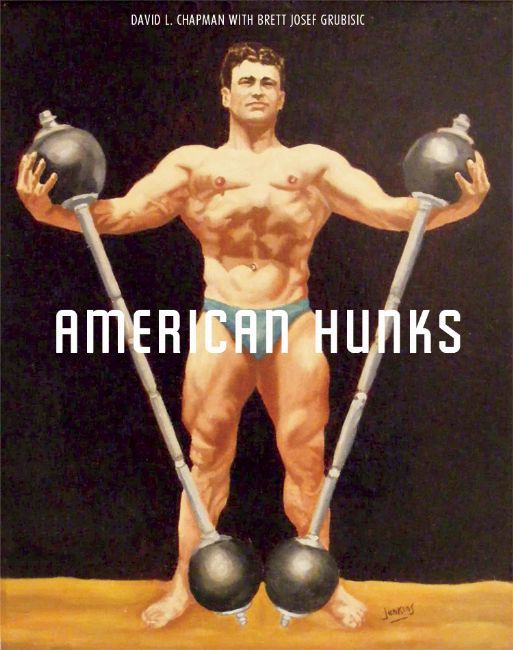
I believe something went wrong between 1950 and 1960, especially with the increased proliferation of the television and the development of broadcast media as a competitor to print media. It seemed like the media was trying to define how a bodybuilder should look. There was a conflict between the way print media believed an accomplished bodybuilder should look, and this influenced the governing aesthetic.  As you can see in the magazine covers below, the model on the left is far slimmer and more defined than the model on the right. A bulkier, less defined physique with broad shoulders and slim arms was preferred in the 50's and you can see this in the way movie stars of the day were built.

 At this time, it seems that female fitness was de-emphasised, as female models seemed to appear only on precious few covers. It should be noted that the Miss World (1951) and Miss Universe (1952) pageants commenced within this time and it is possible that public opinion may have required that emphasis be placed on female beauty, as opposed to athletic ability. The rise of beauty pageants possibly led to the rise of the 'burn fat!!!' movement and the portrayal of the thin woman as 'beautiful'.  
 

Happily, the conflict of the 50's gave way to a resurgence of enlightened bodybuilding between 1960 and 1969, probably due to increased education about nutrition and innovations in training equipment which enabled bodybuilders train with improved effectiveness and recieve quicker resultsHowever, this aesthetic changed with the rise of the Mr. Olympia and media preference for larger than life bodybuilders. Between 1970 and 1990 the increasing use of steroids and supplements by bodybuilders led to the evolution of the superhuman bodybuilder. There was also a resurgence of interest in female fitness, although the reappearance of women on magazine covers was more of an exploitation of their sexuality than an affirmation of their place within the fitness world.

From 1970, increased emphasis has been placed on muscle size and definition, leading to the prominence of the 'six-pack' as evidence of fitness. Innovations in training methodology also enabled the development of finely defined physiques. 

The rise of the internet and the explosion of fitness websites and enhanced information about fitness has led to the growth of a movement towards individual fitness. Ordinary people are becoming increasingly aware of their ability to change their bodies and improve their quality of life


Tuesday, 24 September 2013

Using Outdoor Gyms for Muscle Gains 2

You will recall that I wrote about training in outdoor gyms sometime ago. I just found a video on Youtube which shows how you can use the outdoor gyms to maximise your fitness gains without spending a penny. In addition, training with the gym equipment generates kinetic energy which is converted to electricity and stored in batteries for use by the community.
 
Sample workout:
Pullups: 5 sets of 30, 25, 20, 15,10 reps  Superset with Muscle ups on the lower bar for the same no of reps.
Dips: 5 X 30,25,20,15,10 reps Superset with rows on the lower pullup bar
Jump over the section dividers for a core workout and use the floor area for a Capoeira workout


Friday, 17 May 2013

DEADLIFT YOUR WAY TO A FIT BODY!!!


 It has been a long time since I last posted on LegallyMuscled. I hope you are getting closer to you goal of maintaining a fit mind and a strong body - a body that is living and pulsating with the vigorous energy of aliveness through lifting weights.

Many people have a love-hate relationship with the deadlift. I rather dread the deadlift myself because of the soreness I normally feel when I use them in my training.
 
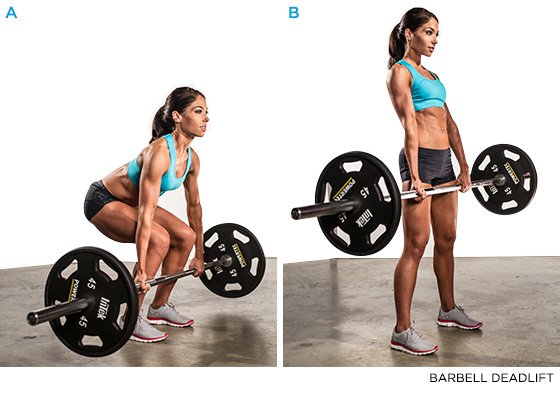
Deadlifts is one of the few exercises that truly stimulate both the lower and upper body. The same cannot be said of squats, which focus mainly on the lower body. Deadlifts work your backside, giving it a firm and rounded look.  upper thighs, hamstrings, lower back, upper middle back, traps, and gives a kind of "fullness" in the chest (take note guys). 

Do not round or flatten your back at any time! This is very important. If you round or flatten your back on the initial pull or to get that last rep you're risking a serious injury that might set you back months or totally end your weightlifting career. If you cannot do deadlifts with good form then do not do them, period. 

 Do not deadlift when you have a pinch in the lower back, it may be a warning sign of injury.


Oops, you forgot your mojo? Deadlift.

Thursday, 25 October 2012

GOT YOUR BACK? Exercise to build a strong back

Stiff Legged Barbell Good Mornings:


Stiff Leg Barbell Good Morning Stiff Leg Barbell Good Morning

This works your lower back, giving your spine the stability required to move heavy loads without sustaining injury
 
This exercise is best performed inside a squat rack for safety purposes. To begin, first set the bar on a rack that best matches your height. Once the correct height is chosen and the bar is loaded, step under the bar and place the back of your shoulders (slightly below the neck) across it.

Hold on to the bar using both arms at each side and lift it off the rack by first pushing with your legs and at the same time straightening your torso.

Step away from the rack and position your legs using a shoulder width medium stance. Keep your head up at all times as looking down will get you off balance and also maintain a straight back. This will be your starting position.

Keeping your legs stationary, move your torso forward by bending at the hips while inhaling. Lower your torso until it is parallel with the floor.

Begin to raise the bar as you exhale by elevating your torso back to the starting position.

Repeat for the recommended amount of repetitions.
 
Caution: This is not an exercise to be taken lightly. Be cautious with the weight used; in case of doubt, use less weight rather than more. The stiff-legged barbell good morning is a very safe exercise but only if performed properly.