Total Pageviews

Showing posts with label bench press. Show all posts

Friday, 22 August 2014

HOW TO LIFT WEIGHT FOR MAXIMUM DEFINITION

A lot of people want to change their bodies, we all want to burn fat, get lean and remain healthy. However, this cannot be achieced merely by jumping on the treadmill and running till kingdom come.
If you really want to lose weight and gain quality muscle, you need to tone down on the treadmill and hit the weights (and I'm not talking about those itty bitty weights). To build quality muscle, you need to use weights which are at least 25% of your body weight. This means that if you weigh 100kg, you should lift at least 25kg in weight.
 
Weight training helps speed up your metabolism, burning more calories than if you merely performed cardio. It also strengthens your bones, reducing the possibility of contracting osteoporosis in the long term. It also improves your coordination and balance, improving your strength and muscular endurance.
 
In order to build definition, you need to lift weights that weigh approximately half your one rep maximum ( This is the amount of weight which you cannot lift more than once). Thus if your one rep max is 90kg, then you need to lift about 45 kg to define your muscles.
The American College of Sports Medicine recommends 8-12 reps for muscular strength and 10-15 reps for muscular endurance. They also recommend training each muscle group 2 to 3 times a week. But, the number of times you lift each week will depend on your training method. In order for muscles to repair and grow, you'll need about 48 hours of rest between workout sessions. If you're training at a high intensity, take a longer rest. Perform at least 1 set of each exercise to fatigue although you'll find that most people perform about 2-3 sets of each exercise.


Tuesday, 29 July 2014

LOSE THOSE FLABBY ARMS 2!!!

Chair Dips: dips are another common exercise that help develop the triceps, while also working the pectorals and major shoulder muscles. All you need to perform this exercise is an exercise bench or step, though a kitchen chair will also work just fine.
To perform a basic bench dip:
  1. Sit up straight on the edge of the bench or chair, extending your legs in front of you and planting you feet firmly on the ground.
  2. Firmly grip the edge of the bench or chair, with your fingers facing downwards. Slowly slide your body off the bench, without moving your legs.
  3. Slowly lower your body towards the floor, keeping your back straight, until your arms from a 90 degree angle.
  4. Push your body back to the original starting position. You have now completed one repetition.
Variations: To increase the difficulty of the bench dip, try propping your feet up on a second exercise bench or chair.
Old school arm circles. Arm circles are a great, easy exercise that can be performed anytime, anywhere, making them a great exercise option for beginners. Arm circles help to tone both your biceps and triceps, while also strengthening the back and shoulders.
To do arm circles:
  1. Stand with your feet about a shoulder width apart and extend your arms straight out to the sides, so they’re in line with your shoulders.
  2. Begin rotating your arms forward in small, circular motions, without moving your wrists or elbows.
  3. After about 20 circles, change direction and begin rotating your arms backwards.
Variations: To increase the intensity of the arm circles, you can rotate your arms faster or use hand weights that are light enough to allow you to do 8-10 rotations.
Targeted bicep curls. Bicep curls are one of the most basic weight lifting exercises, which help you to build arm strength and look good in short sleeves. Bicep curls target the three bicep muscles which control the flexing of your elbow.

To do bicep curls, you will need a set of dumbbell that weigh between 5 and 15 pounds each.
  1. Hold a dumbbell in each hand and stand up straight with your feet hip width apart.
  2. Let your arms hang relaxed at your sides, with your palms facing forward.
  3. With your elbows held at your hip bones, slowly raise both weights until your forearms touch your chest.
  4. Slowly lower the weights back into the starting position, maintaining tension in your biceps. Make an effort to maintain good posture at all times, with your back straight and stomach pulled in.
Variations: If you are performing this exercise at your local gym, look for an arm-curl machine which will target the exact same muscles as the dumbbells. If you’re doing the exercises at home for the first time, you can also use a standard 15 oz can of beans or peas to perform this exercise.

Monday, 28 July 2014

LOSE THOSE FLABBY ARMS!!! Part 1

They have many names, but they are best known as 'Christian mother' arms. Flabby triceps have been a bother to many women for centuries, irrespective of race. These arms have caused lots of embarrassment to individuals and with time, can affect a persons confidence.
 
Side plank reverse fly. This is a great exercise for building overall upper body strength. Although it doesn’t target the arms specifically, it will help build the necessary strength to do other arm-specific exercises. It is also fantastic for the oblique muscles along your side.
 
To perform the side plank reverse fly:
  1. Lie down on your side on the floor and prop yourself up with either your hand or elbow. The elbow is an easier option for beginners.
  2. Stack your feet one on top of the other and lift your hips off the floor so that your body form a diagonal line.
  3. With your free hand, grab a dumbbell and extend your arm straight up, keeping it in line with your shoulder.
  4. Slowly lower the dumbbell in front of you, until your arm is perpendicular to your body.
  5. Slowly raise the dumbbell back up, forming a “T” shape with your arm and the dumbbell. You have now completed one repetition.
Variations: Instead of stopping when the dumbbell is perpendicular with your body, you can keep going, rotating your body and twisting the dumbbell underneath, before returning to the starting position.
 
Clean Push ups. The push up is a pretty basic exercise, and one that most people have attempted at some point in their lives. It’s an exercise that has stuck around for a reason – it works. Push ups target the tricep muscle in your arm, although they also strengthen your pectorals, abdominals, quads and lower back, making it a great overall exercise.
 
To perform a basic push up:
  1. Lie face-down on the floor, keep your legs together and prop your feet up on your toes and the balls of your feet.
  2. Place your hands palms-down on the floor, approximately a shoulder width apart.
  3. Raise yourself up, using just the strength in your arms, until both arms are fully extended. Your body should be in a straight line from your head to your heels. This is the start and end position for the push up.
  4. Slowly lower your body to the ground until your elbows form a 90-degree angle. Inhale as you lower down.
  5. Slowly raise yourself back up into the extended arm position, exhaling as you do. You have now completed one repetition.
Variations: You can vary the basic push up exercise in a number of ways. If you’re just starting to build up strength in your arms, you can make the exercise slightly easier by keeping your knees on the ground throughout the exercise. You can also try a triangle push up, where your hands form a triangle with your forefingers and thumbs, directly below the breastbone.


Friday, 4 July 2014

3 TECHNIQUES TO TURBO CHARGE YOUR MUSCLE GAINS

I believe in squeezing out the maximum benefit from each workout session. Here are my 3 favorite training techniques to get the most from each and every exercise, in no particular order. These strategies will make your existing training routine more effective and diverse when it needs a boost.
 
Pre-exhaust training
 
Pre-exhaust training utilizes isolation movements to tire out a specific muscle group before moving on to a compound movement. For example, you could perform a chest fly before the bench press, or leg extensions before you squat. I usually carry out 100 tricep pushdowns and cable curls to warm up my arms and hit the muscles deeply.
 
 
The pre-exhaust method is one of my favorite training techniques for several reasons. First, by significantly fatiguing the isolated muscle group, it forces the fresh muscles to pick up the slack during the compound movement. The fatigued muscle gets pushed beyond what it would have been able to do without the pre-exhaust sets, and you don't have to sacrifice the full-body strength stimulus of, say, a bench press by trying to make it into a chest isolation exercise.
 
Supersets
 
A superset is two exercises performed back to back with no rest between the exercises. Supersets can increase your workout density, shorten your workout duration, spur new growth, and deliver an incredible pump. You can pair exercises for the same muscle group, like a triceps push-down and close-grip bench press, or pair movements for opposing muscle groups, like biceps curls and triceps push-downs.
 
I love to use this technique in conjunction with the pre-exhaust technique. As shown by the triceps push-down and close-grip bench press example above, I like to perform an isolation exercise to pre-exhaust a muscle and then immediately follow it with a compound move. This drives the target muscle past the point of failure and results in a killer pump.
 
Rest- Pause Training
 
Rest-pause training incorporates a brief rest period, or even a couple of rest periods, during a single set. This allows you to move a heavier weight for more reps than you could in a straight set. You allow your muscles to partially recover, but not completely, before you hammer them with another barrage of heavy reps.
For example, if you were to perform rest-pause on a set of triceps push-downs, you would first perform reps until you reach failure or a predetermined number of reps, and then you would rack or hold the weight, take an extremely brief rest period of 5-15 seconds, and rep to failure again. The brief rest allows you to extend your set and overload the working muscle.
Rest-pause sounds simple, and it is, but I would warn you to pay close attention to your form. Don't use such a heavy weight that you have to get sloppy to move it. While some people go crazy with rest-pauses and use them in multiple sets on a regular basis, I advise you limit them to a single set of each exercise you perform. Rest-pause is an overload technique, not a replacement for straight sets.
 
Incorporating these techniques into your training program will supercharge your muscle gains, building ip more muscle whilst giving you razor sharp definition.
 

Saturday, 24 May 2014

5 SECRETS TO BUILDING A BIGGER BENCH

The barbell bench press remains the king of exercises, and the bigger your bench, the greater your bragging rights within the gym. Bodybuilders and people with physique-oriented goals know that a bigger bench equates to a larger, rounder, fuller chest as well as bigger shoulder and triceps muscles. Improving your bench press has the added benefit of building your mental muscle, as it requires a significant amount of fortitude to lift a wright capable of crushing you into the ground.


1. Accelerate
 
Compensatory acceleration training, or CAT, is lifting sub-maximal weight with maximal force, which teaches the nervous system how to recruit more muscle every time you lift. The speed creates the illusion that the weight is lighter than it really is, thus enabling your body to handle greater amounts of weight.
 
2. Add Dead Benches to your routine
 
A dead bench is done in a power rack with the weight resting on the pins set just above your chest. The weight starts at chest level—not in the arms-extended position—and is pressed up as explosively as possible. Because of this, you'll develop tremendous starting strength at the bottom of each rep. 
 
3. Do more sets with Fewer reps
 
Since you're training for a one-rep max, the first rep of every set is extremely important. Even when training with loads as light as 50 percent of max, most powerlifters keep the repetitions low, opting to do more sets to achieve volume when it's needed.
 
4. Build your Arms
You can't press huge weights with spindly arms. in order to avoid injury, you have to build your triceps and deltoids. However, don't forget the biceps because they help stabilize the joints (as an antagonist muscle to the triceps), and strong forearms help you squeeze the bar tightly. This will make the weight feel lighter in your hands.
 
5 Meditate
 
Few people realise that bodybuilders actually need to meditate. Your central nervous system isn't adept in differentiating between a real experience and an imagined one. Set some time aside every day to visualize blasting through maximal weights.
 
.


Monday, 19 May 2014

BUST STOMACH FAT WITH THE PLANK!!!

Culled from fitness bloggers
 
For a long time this has been one of my favorite exercises. It’s one of those that you see someone doing in the gym and you think to yourself, “Yeah that looks pretty easy!” Of course in reality its a lot harder than it looks, but what does it do? Put simply it’s a core exercise designed to improve strength and tone in the stomach and lower back. It’s particularly favored by both serious athletes and newbies alike. Even post-natal moms are often advised to do the plank as static stomach exercises place less aggressive stress on your stomach muscles following child-birth.
 
Performing the Plank

First bend your elbows at 90 degress, forearms on the floor, elbows beneath your shoulders. Your body should be straight like a plank of wood from your head to your feet. This is important. Many newbies will lift their bum up in the air so they look more like a hump-back bridge! This is not a plank. For those who are struggling with the plank then a modified plank with your knees on the floor will make it a lot easier.
 
plank-exercise
Whats a Good Time For The Plank?

I’ve always been able to hold the plank for a reasonable while. I remember in my early 30′s being able to hold for 3 minutes. Nowadays I can do about 2 minutes. The plank is an exercise that with practise you can greatly improve your own time. In fact the best way to develop your strength is to do the plank in steps, 30 seconds and then a pause for 10 (or however long you need) and so on.
 
Plank Variations

The great think about the plank is that there are plenty of variations and tweaks you can make to vary things up a little, from one foot off the floor to even one arm off the floor (what I call hitch-hiker planks).
one-leg-plank
 
The World Record for the Abdominal Plank is 1 hour and 5 minutes…ouch! I wince just thinking about that!
 
If you’ve tried it, how long can you hold the plank for?

Tuesday, 6 May 2014

SHOCK THERAPY 1: TRAIN INSANE OR REMAIN THE SAME!!!

If it was easy, everyone would be doing it.  Stand apart from the rest.  Get fit or get out!Get the body you want now! Free report on: How to gain rock solid #muscle without the fat & experience insane:(Men’s fitness.

ARMS
 
Many of us fail to push our arms to the limit. This workout will destroy every muscle fibre in your arms, forcing your body to develop a whole new set of triceps, biceps and deltoid (shoulder) muscles.
 
There are few sensations that even approach the feeling of pushing yourself beyond THAT point you felt you could not reach. You'll feel it today as you feel your muscles push beyond what you thought was there capacity. During this workout, most of the exercises will be carried out till failure, this means the point where you are physically incapable of carrying out one more rep. At this point, you can rest for 10 seconds and drink some water.
 
Warm up:
 
To fully enjoy the benefits of this workout, you will have to start from a point of muscle exhaustion. Therefore, the warmup will consist of the following:
 
10 Sets of 10 Tricep Pushdowns
10 Sets of 10 Bicep Curls
 
 
This 200 rep will leave your arms weeping for mercy, but remember this is just a warm up, the aim to break through your mental barriers and access that reserve of strength and endurance that lies within you.
 
Now we go into the workout proper:
 One arm dumbell preacher curl (2 sets working till failure): This isolates the biceps for a kick ass pump. Make sure you place your feet square on the ground, avoiding the temptation to use your body to heft the weight.
 
 
French Curl (2 Sets working till failure): This will set your already exhausted triceps on fire. Grip one heavy dumbbell behind your head using both of your hands. Lower the weight behind you, until your forearm is parallel to the floor, and then heave it up using the meaty muscles of your triceps.
 
 
T-Curl: This is a merger between the dumbell flye and the dumbell curl. This workout lengthens your biceps, whilst pumping blood into each fiber. Crank out 2 sets, going till failure on each one and having no mercy on your body.
 
 
Dumbell Kickback: You'll carry out 2 sets of 40 reps per arm. By now, I guess you're crying with pain, but remember that your body can take anything, it's your mind that needs to adapt to the pain. This exercise hits the triceps head directly, turning your arms into molten lead.


Pull Ups: Perform a chin-up in three positions: wide grip, normal grip, and close grip. Make sure your palms face toward you to emphasize the biceps. Perform 10 reps for each position, totaling 30 reps.
 
If you get to this point in the workout, you'll probably feel like your arms have been injected with sulphuric acid. That's good, it means you've moved to the next level. Make sure you hydrate properly throughout the workout and consume a lot of protein to help rebuild the  muscle fibers you've just destroyed.
 
Get ready for muscle annihilation!!!!


Saturday, 28 December 2013

10 WAYS TRAINING CAN SHAPE YOUR ATTITUDE

Any successful athlete will tell you that the mind is your most powerful tool. The successful athlete is a dream chaser. He sees what he wants to become, he puts in the work and endures the pain necessary to become what he has envisioned; after he achieves his vision, he sets a greater, more demanding vision and sets out to achieve it. For the man with the Iron Mind, nothing is impossible so far as he is willing to put in the work.

I have found that a person's attitude in the gym mirrors their attitude in the world outside the gym. In this article, I will outline 10 ways through which training you body can positively shape your attitude towards other challenges.
THE WORKOUT BEFORE ME IS THE MOST IMPORTANT THING IN THE WORLD:     
To the athlete, every workout is the most stepping stone to achieving his vision, and he concentrates all his efforts accordingly.   He does not allow any distraction or dissipation of energy, his mind is always clear and fixed on his purpose.
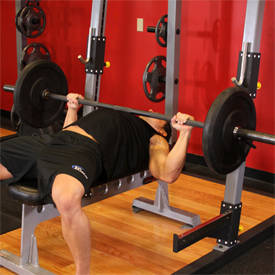


I NEVER BACK DOWN UNTIL I WIN
He runs until he is exhausted, he lifts until no ounce of strength remains in his muscles, then he pushes for more until he has no more to give. 
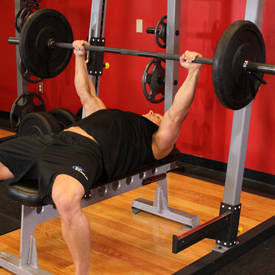

I NEVER MISTAKE ACTIVITY FOR ACCOMPLISHMENT

Its not enough to complete your workout. After every workout, the athlete asks himself " Did I do all that I was capable of doing today?" 


 I MANAGE WHAT I HAVE TO GET WHAT I WANT
To get more out of his performance he maximizes resources like time, equipment, information, money, and the people around him in ways that help him achieve the most from his physical, mental, emotional, and psychological abilities and genetic potential. If he does not have something, he improvises.


I STRIVE TO BE THE BEST I CAN BE AT ALL TIMES
 The successful athlete knows that there is always room for improvement, and strives to operate at the highest level of his potential at all times. If he doesn't perform to his potential, he rests, prepares himself and returns to the challenge.


I NEVER SETTLE

No matter the challenges or discouragement the successful athlete faces, he never settles for what he can do right now. He is constantly on the lookout for resources, advice and information that can help him break his limits and reach his potential. 


I KNOW MYSELF 
Never ask anyone what your potential is. Stop comparing yourself to other people, you don't need anyone's approval or validation to achieve your goals.   


IF I CAN THINK IT, I CAN DO IT!!
Make a commitment to stop questioning that part of you that knows who you are and what you are capable of doing. Follow your instincts and learn from your mistakes; don't be a slave to popular opinions that you have not tested and found to be true. 


I KEEP MOVING FORWARD
Every athlete gets to a point in their training where training becomes boring, and the only way to alleviate the boredom is to set a greater, harder, more challenging goal and work towards that goal. They always move forward, irrespective of any failures, distractions, discouragement or difficulty.  


I SURROUND MYSELF WITH WINNERS
 When I have optimistic, disciplined, result driven people around me, I am condemned to operate in an environment of excellence. Avoid anyone who tells you that something is impossible, they can only contaminate your mental state

Tuesday, 4 June 2013

PLAY AWAY THE POUNDS

Exams are over.... finally!!!!!!


After six months of unrelenting academic drudgery, I have packed my books, articles and notes far from my sight; from now onwards, I'm going to kick back, rest and think about the future ( Can I hear an amen!!!). I'm now working hard to shed all the extra weight I gained while studying for exams and regain my six pack in time for summer.  

A lot of students also want to lose some weight or build some muscle before summer, but they  want to stay out of the wonderful sun instead of working out in a dreary gym. This got me thinking about ways of working out in a fun, collaborative environment, while enjoying the sun.

On my way back from a class picnic last week, I discovered a free outdoor gym at Mile End Park with a fitness bike, a chest press machine, a cross trainer, an abdominal bench, a ski machine and a treadmill. The zone has a traversing wall, kickwall, basketball goal, tennis wall and freestyle area for aerobics and martial arts. I particularly liked the dip bars and the pull up bars.

I have found several outdoor gyms in many parks and playgrounds in London, so if you don't have the spare cash for a gym membership, or you wish to take a break from indoor training and have some fun in the sun ,then you can make use of these facilities.


Friday, 31 August 2012

Secrets of Superathletes

 
The Olympic games have come and gone once more, some countries left loaded with medals, while others like my beloved Nigeria, left empty handed.
 
The Olympics celebrate the athlete, the individual who dedicates his life to training and honing his physical abilities beyond normal human limits. From Usain Bolt to Rafael nadal, top athletes are getting fitter, faster and stronger than ever.All sports, particularly professional sports, are constantly on the lookout for superhuman performers who can transcend what people thought was possible and the paying public demands as much.
 
Steroids, suits, and Technological advances aside, How do athletes get fitter, faster and stronger within the relatively short periods between competitions? I did some research on the question and here are my results


Mental Tenacity
 
Mental tenacity — and the ability to manage and even thrive on and push through pain — is a key segregator between the mortals and immortals. Tom Fleming, a two-time winner of the New York marathon and a distance runner who was ranked fourth in the world, says there’s a reason he was so fast.“I was given a body that could train every single day - and a mind, a mentality, that believed that if I trained every day — and I could train every day — I’ll beat you".  The hypothesis is that elite athletes are able to motivate themselves continuously and are able to run the gantlet between pushing too hard — and failing to finish — and underperforming. To find this motivation, the athletes must resist the feeling that they are too tired and have to slow down. Instead, they have to concentrate on increasing the intensity of their effort; that takes mental strength, but allows them to perform close to their maximal ability.
 
Mental Rehearsal
This is a time-tested practice used by successful athletes and even non-athletes in all assets of life. Mental rehearsal is repeating in your mind over and over the actions and techniques required to achieve success. If you are a basketball player, you rehearse each individual phase of the jump shot over and over in your head. The goal with mental rehearsal is to create automation. When you watch incredible athletes like Lebron James you think that the game just comes naturally to him. Well it does now, but that wasn’t always the case. He trained his mind for years and years on every little detail in every step, dribble, and shot he takes. Break down the skills of your sport and repeat them over and over in your mind, visualizing yourself performing them with perfection. With time, the skills will become second nature and you won’t even have to think before executing them.
 
Support Team
Mental toughness can come from within but it can also come from outside. Having the right individuals around you is critical to achieving success. Always surround yourself with like-minded people who are as driven as you are to push hard, be the best, and achieve success. Negative people, or the “haters” as they are sometimes referred to serve no purpose in your life. Eliminate them and there’s nothing holding you back. Having a strong support team such as your family and friends is also great for defining purpose. Not only will you want to succeed for yourself, you will also want to succeed for them and that is a remarkably powerful motivator.
Arianny Celeste- UFC fighter


Sunday, 26 August 2012

Crazy Workouts for Building a Steel Core

"I find that my core is ostensibly the toughest part of my body to firm and shape up!!! It has been a frustrating venture for me as I have had 3 children and it unfortunately shows in the areas of my person that I do not want this to show. I don’t know if I can do it" - Worried mother
Your core is the corset of muscles and connective tissue that encircle and hold the spine in place. If your core is stable, your spine remains upright while your body swivels around it. The core comprises of all the muscles and tendons between your knees and your rib cage, partivularly these 4 muscles—the rectus abdominis muscle (the six pack), the internal and external obliques (those muscles at the sides), and the transversus abdominis. Abdominal muscles have many important functions such as contributing to breathing, they are responsible for the acts of coughing, and sneezing, as well as maintaining posture and speech.
The rectus abdominis can be worked out with the basic crunch, the vertical crunch, the reverse crunch, and the full vertical crunch, and when at a low enough body fat percentage (10-12% for males, 15-18% for females) the individual parts of the muscle become visible; many refer to this visible separation as a six pack. By exercising the internal and external obliques the stomach can be flattened while the waist line can be reduced


corebw

Here are some crazy exercises that will help you flatten that stomach and build a solid core within a reasonably short period.

The Fireman Stair Climb

Fill a back pack with books or any heavy objects (the weight should be at least 20kg for this to be really effective). Try to run up and down 10 stairs 6 times within 3 minutes. this will build your core, leg and heart to new highs.

The Mighty Plank

The plank exercise  is a great way to build endurance in both the abs and back, as well as the stabilizer muscles. This move is also great for building strength for pushups, an exercise that requires quite a bit of core strength. You can add some weight on your back to increase difficulty.
Plank


How to:
  1. Lie face down on mat resting on the forearms, palms flat on the floor.
  2. Push off the floor, raising up onto toes and resting on the elbows.
  3. Keep your back flat, in a straight line from head to heels.
  4. Tilt your pelvis and contract your abdominals to prevent your rear end from sticking up in the air or sagging in the middle.
  5. Hold for 20 to 60 seconds, lower and repeat for 3-5 reps.

Good Ol' School Pushups  (need I say more?)


Sunday, 1 April 2012

How to do the Bench Press

  1. Lie back on a flat bench. Using a medium width grip (a grip that creates a 90-degree angle in the middle of the movement between the forearms and the upper arms), lift the bar from the rack and hold it straight over you with your arms locked. This will be your starting position.
  2. From the starting position, breathe in and begin coming down slowly until the bar touches your middle chest.
  3. After a brief pause, push the bar back to the starting position as you breathe out. Focus on pushing the bar using your chest muscles. Lock your arms and squeeze your chest in the contracted position at the top of the motion, hold for a second and then start coming down slowly again. Tip: Ideally, lowering the weight should take about twice as long as raising it.
  4. Repeat the movement for the prescribed amount of repetitions.
  5. When you are done, place the bar back in the rack.
Caution:
If you are new at this exercise, it is advised that you use a spotter. If no spotter is available, then be conservative with the amount of weight used.

Also, beware of letting the bar drift too far forward. You want the bar to touch your middle chest and nowhere else.

Don't bounce the weight off your chest. You should be in full control of the barbell at all times.