Total Pageviews

Showing posts with label nutrition. Show all posts

Saturday, 27 September 2014

BENEFITS OF GREEN TEA

I just had a cup of green tea and honey, and I felt so inspired that I just had to write about it.
 
Green Tea iced tea
 
Tea drinking has been an active part of many Asian cultures for centuries, and whilst it was reputed to possess health benefits, the health benefits of Green tea are yet to be fully uncovered. Studies have found an association between consuming green tea and a reduced risk for several cancers, including, skin, breast, lung, colon, esophageal, and bladder. This is because Green tea is the best food source of a group called catechins. In test tubes, catechins are more powerful than vitamins C and E in halting oxidative damage to cells and appear to have other disease-fighting properties.
 
 
keep-calm-and-drink-green-tea-39Drinking a cup of tea a few times a day absorbs antioxidants and other healthful plant compounds, boosting your metabolism and promoting weight management. In green-tea drinking cultures, the usual amount is three cups per day. Allow tea to steep for three to five minutes to bring out its catechins.
 
The best way to get the catechins and other flavonoids in tea is to drink it freshly brewed. Decaffeinated, bottled ready-to-drink tea preparations, and instant teas have less of these compounds. Tea can impede the absorption of iron from fruits and vegetables. Adding lemon or milk or drinking tea between meals will counteract this problem.


Wednesday, 23 July 2014

HOW TO STRIP FAT AND GAIN MUSCLE

 
A common misconception is that you can hit the gym, pile up the weight and create the body you want. You'll need to combine healthy eating with fat-burning aerobic exercise and muscle-building strength training to get solid, lasting results.

 
Here are steps to Stripping that unwanted fat and revealing the smooth, hard muscle mass underneath.


  • Ditch liquid calories that come from soda, alcohol, specialty coffees, energy drinks and sugary juices. Replace with water and fresh fruit juices.
  •  
  • Eat nutrient dense foods which are high in vitamins, minerals and antioxidants without the added fat, calories and sugar. These food sources are plentiful in Nigeria and include corn, beef, leafy vegetables and tubers.
  •  
  • Eat a lot of protein,
  •  
  • Build muscle with strength-training two to four times a week. You can focus on two or three muscle groups per day or alternate between upper body and lower body workouts. Let your muscles rest for at least 48 hours before training the same muscle group to avoid injury.
  •  
  • Use weights that challenge your body for muscle growth. You should be using a weight with which you can complete at least six repetitions but no more than 12. If you are not able to tire out your muscles within 90 seconds, increase the amount of weight you are using.
  •  
  • Perform at least 150 minutes of cardio exercise each week. Split this time up over several days a week. You can work at a moderate pace for longer periods of time.

Tuesday, 22 July 2014

LEAN MUSCLE DIET: EAT LIKE AN OLYMPIAN

 
It's no secret that your fitness is directly tied to what you eat. A lean muscle diet consists of quality protein, carbs and essential fats. Protein is used to repair muscle fibers that have been broken down during workouts, carbs are used for energy and essential fats are used to boost testosterone levels. Testosterone is a muscle-building hormone.
 
Here are some foods that support the development of strong, lean, muscle mass.
 
Spinach
 
There is some truth behind Popeye’s love for the green stuff, despite the fact that it decreases to about 1/8 of its original size when it’s cooked. Spinach is a great source of amino acids and glutamine, essential nutrients for the growth of lean muscle.
Beef
 
You can’t go wrong with a good bit of beef. It might have become fairly expensive in recent years but it’s an important lean-muscle building food due to its sky-high protein, zinc, B vitamins and iron content.


Apples
 
It might come as a surprise to many, but apples help to prevent muscle fatigue and increase muscle strength due to the specific polyphenols that they contain. Recent research has also suggested that apples speed up the fat burning process, making them an ideal pre-workout snack.
 
 
Sweet potatoes
 
Although they are full of carbs, sweet potatoes are great for building lean muscle. The carbs contained in sweet potatoes keep your glucose stable, a key element in burning fat and preserving muscle. They are a unique carb that actually aid weight loss due to their high fibre content, but they actually keep you fuller for longer than most other starchy vegetables.


Eggs
 
Often described as ‘the perfect protein’, eggs are your best friend when it comes to boosting lean muscle growth and strength gains, but this isn’t just down to the protein alone; the cholesterol found in the yolk is also a contributing factor.


Monday, 21 July 2014

Sun Secrets Revealed: How to protect your skin from the sun.

Culled from Military fitness
 
 
Apply-Sunscreen1
 Yesterday I spoke with my friend Louise and found out that she just celebrated her 90th birthday by zip lining in South America! When she was 79 she realized that she felt old and didn’t like it so she decided to make some changes. By 80, she had taken up jogging again after a 40 year hiatus. At 85, she started a lecture series and wrote a book. It’s no surprise that everyone wants to know her secret to living such a long, youthful and energetic life. Our conversation got me thinking about the choices we make every day, both good and bad, and how the accumulation of those choices will dramatically affect us in the future. I know it feels lame for some to talk about prevention, but stick with me. You may learn a thing or two that will help you keep pace with Louise…that is, if you can catch her!

Alarm to Awareness

Since we’re having a conversation about summer sun, it’s important to know that every year, there are nearly one million skin cancers detected. While I’m not advocating that you shun the sun altogether, it is important to take the simple steps to protect yourself.
 
Now that you are properly prepped, there are some potent skin protecting nutrients that may hold the secret to heathy skin and skin cancer prevention. Let’s start by reviewing some familiar friends in the nutrition world:
 
Vitamin C — found in the dermis and epidermis layers of the skin. Too much exposure to UV rays diminishes the concentration of Vit C and it’s antioxidant protection leaving your skin and your organs more vulnerable to free radical damage. It is also essential for collagen production which is the foundation of our skin, cartilage, ligaments and blood vessels. A minimum recommendation is 75mg/​d for women and 90 mg/​d for men.
 
Zinc — an essential trace mineral, mostly found in our muscles and bones but also found in skin tissue, it helps to stabilize skin cell membranes and protects against something called reactive oxygen species (ROS) which can damage our DNA. Zinc also protects the skin from bacterial toxins. The reason you often find Zinc in sunscreens is due to its ability to absorb well and reflects UV rays. Women need 8mg and men need 11mg per day. Pumpkin seeds, cashews and cacao beans are all good plant sources while oysters, beef, crab and lobster are good protein sources.

Nice Reflection

Your skin, nails, hair and eyes are an outward reflection of inner health and vitality. Eating a clean diet, relatively free of junk, processed foods and chemicals, reflect in your skin by its pallor, suppleness and elasticity. You can also gain a double benefit from internal nutrients that can be used externally as well. Here are my two favorite topical treatments that may be the two best kept secrets to superior skin health:
Pycnogenol® — a naturally occurring super-​​antioxidant found most concentrated in the bark of French maritime pine trees. According to the National Institutes for Health (NIH) in studies of cell cultures, it has been shown to inhibit damage caused by UV radiation. It also acts as a very effective anti-​​inflammatory. If you supplement with pycnogenol, I highly recommend a balanced, comprehensive source like Reliv Now® with LunaRich® and Glucaffect® with LunaRich. (See below for more product info).
Topically, Pycnogenol provides excellent skin soothing and protective benefits like:
  • Boosting collagen renewal
  • Improving skin elasticity
  • Reducing wrinkles
  • Promoting healing
  • Improving acne
  • Preventing UV damage
It’s anti-​​inflammatory properties help calm skin and it has been clinically shown to reduce sun damage-​​induced hyper-​​pigmentation — darkening or freckling of the skin caused by excess melanin. I use Reliv’s r-​​collection which contains a host of natural skin-​​loving nutrients in formulas that absorb effectively unlike most skin care products on the market today that remain on the surface of the skin.
Retinoids — compounds in the Vitamin A family that work to regulate skin cell function and growth. Within your dermis and epidermis, there are proteins and receptors that are extremely responsive to retinoids. Too much sun exposure destroys Vitamin A so replenishing it both internally and externally is key to cellular health. Topically, retinoids have been found to unclog pores which can be helpful in acne treatment and prevention. Additional benefits include:
  • Minimizing the appearance of fine lines and wrinkles
  • Improving cellular replacement rate of the skin
  • Reducing dry skin and acne
Good food sources include sweet potatoes, raw carrots, spinach, broccoli, cod liver oil, eggs and other dairy products.


Monday, 23 June 2014

COUNTING CALORIES MAY BE A WASTE OF YOUR TIME

Science is great, but sometimes it makes things a little more complicated than it really needs to be. For years, I've been hearing lots of rubbish about calorie counting (especially from the ladies). 
 
Food Journal
Calories are important. They give us energy to live and move. But if counting calories makes you so worried about not eating more than 1500 or 2000 calories per day that you lose sight of what you’re actually eating, then you need to make some serious changes to your mindset.
 
Eggs Florentine
 
Your focus should be more on the quality of food than the amount of calories are in the food. That is what really matters for optimal health. Do you think the first olympians in Greece counted calories? Or the Native Americans? Or paleolithic people? Not a chance! They didn’t even know what a calorie was. They just at a natural diet, moved around, lifted things up, threw things, etc. However, these people were some of the fittest in the world.
 
 
The only thing that gives a calorie value is the amount of nutrition that it brings to your body. Period!
If you’re a beginner, just starting out on your fitness journey, trying to count everything will be so frustrating that you’ll want to quit. In these cases it’s beneficial to keep a diet journal that doesn’t attempt to keep track of the exact amount of calories. It just makes you more aware of your food choices and when you’re eating.
 
So stop counting and just enjoy your food.


Wednesday, 21 May 2014

FACTS YOU SHOULD KNOW ABOUT THE AVOCADO

 5 Things You Should Know About Avocados
 
1) A whole, medium-size avocado (about fiveounces) has 226 caloriesand contains about three grams of protein and nine grams of fiber.
 
2) More than 80% of an avocado’s calories comes from fat, most of which are healthy, monounsaturated fats. One of those fats—oleic acid—has been shown to reduce cholesterol levels.
 
3) While the banana is most famous for potassium content, a typical avocado contains 35% more potassium (684 milligrams vs. 505) than that of its long, yellow cousin. Avocados are also a decent source of calcium and magnesium, crucial electrolytes for athletes because of their role in muscle function and fluid balance.
 
4) Every avocado contains nearly 20 vitamins, minerals, and phytonutrients—nutrients derived from plant material that provide a defense against cancers, heart disease, and signs of premature aging.
 
5) Regular consumption of healthy fats like the ones found in avocados has been shown to promote a boost in testosterone and growth hormone production.

Tuesday, 13 May 2014

HOW TO EAT FOR MAXIMUM GROWTH

You're a well-informed workout buff, so when science suggests one of your trusty training principles is ineffective, your head spins. But don’t worry—we’ve cleared up seven of the top fitness myths circulating the sweaty air of your local gym.Mejores ejercicios para bajar la panza http://zeropanza.com
The 12 most-effective muscle builders on the planet.
12 Moves To Power Up Your Workout


You need to eat to grow, bla bla bla ....yeah we all know that!!!

The problem is, how do I fit 5-6 meals a day into my busy schedule. Add to this the difficulty in finding healthy food around my office and the cost of eating that many meals per day  and you will get a picture of how hard it is to eat enough to maintain my body weight, talk less increase mass.

Having suffered through this conundrum for the past few months, I experimented with different food sources to determine which foods would help me generate the greatest amount of mass in the quickest time.
 
This post is the outcome of my experiments; please feel free to try this at home :).
 
12. Nutella ShakeMorning: I mixed up a muscle shake made up on 2 cups of raw oatmeal, 20cl of milk, 1 banana, 1 avocado, 4 egg whites, 3 tbsp Peanut butter and 3 teaspoons of honey for taste. Blend these ingredients together and drink it up at once. without pausing for breath. This shake represents a balanced diet of carbohydrates, proteins, fats and oils, fibre and water and it should keep hunger at bay for the next few hours at least.


20 Foods That Keep You Young
Breakfast: This needs to be quick because you'll be rushing out the door as you chomp. I rustled up a  sandwich from wheat bread, lots of peanut butter and boiled eggs. I wash this down with a mug of  chocolate, and I'm good to start the day.

When you’re on a high-protein diet, you need healthy chicken breast recipes. Here's one you can handle—and it tastes good too.Lunch: I'm normally at the office at this time, so I quickly order a plate of white/jollof/fried rice with beef/chicken and plantains. I usually eat whilst working, so I avoid any foods that are liable to stain.

Pre-Workout: I usually get back from work by about 7pm and immediately get ready to hit the gym. I usually would grab anything I found in the fridge e.g a banana, apple, biscuit.  However, I recently discovered a phenomenal pre workout meal in 'gari' (coarse ground cassava flour), soaked in water, generously sprinkled with peanuts. I also add milk to increase the protein content. The high carbohydrate content gives me that 'kick' needed to move my weight lifting to the next level.

Dinner: This is usually eba/pounded yam with any soup available at the time. The meat contained in the soup/stew (however you all it) provides protein, whilst the eba is pure carbs. On a workout day however, I usually dine on a plate of beans. This source of pure protein helps rebuild the muscles destroyed during the course of training, helping me develop maximum muscle in minimum time.

Eba (Cassava Flour) with Vegetable StewDishing : Cowpeas Curry / Black Eyed peas Curry / Lobia Curry


Tuesday, 2 October 2012

SEXY MAMA Pt 1: KEEPING FIT DURING PREGNANCY

Sexy_pregnant_woman : Woman holds her pregnant belly and stands at the window 

If you’re concerned about the best way to keep your body and baby healthy during pregnancy—or how you’ll ever lose the excess weight afterward—you’re not alone.

Many women dread pregnancy; it is a well known fact that most women feel uncomfortable, bloated, emotional during pregnancy. Unfortunately, not many trainers know how to work with mums-to-be, thereby worsening an already difficult situation. 

I embarked upon research on how pregnant women can keep themselves fit, healthy and happy throughout the pregnancy and I realised that pregnancy need not be a miserable period, it is a beautiful time in the life of a woman. Being a mum does not mean you have to be uncomfortable in your own skin; you need to create a plan for yourself which will fit into your often unpredictable life and the life of your baby.

I looked through the internet and I found this really nice Baby Bump Fitness system, which is an exercise and fitness programme designed for the pregnant woman. click ----->>>Here<<<------
to find out more about this programme.

Here are some tips I found in my research.
  • The extra 300 calories a day you are supposed to eat during pregnancy for the development of your baby should not consist of nutritionally empty and unhealthy foods.
  • It is important to keep your body fit and strong during pregnancy by exercising through each trimester; however you must ensure that your training program is tailored to your trimester.
  • The extra weight you will gain during pregnancy will not just slip off after the baby is born, you have to go the extra mile to make it go away.
  • To lose weight effectively, your workout should be broken into short, manageable chunks of exercise which will recruit as many muscles as possible at once. This of course means you have to think outside the box.
  •  Your cravings will not go away, you need to find a nutrition plan, foods and recipes which will satisfy all your cravings in a healthy way while allowing you get back into your favourite jeans after pregnancy. 
  •  Being proactive is the best way to get back in control of your body.
I truly believe all women should be fit, strong,healthy and confident during their pregnancy. Exercising and eating right during pregnancy is much more than getting you into your slim jeans, its about keeping you and your baby healthy during the process.
Sexy African Pregnant Woman : Beautiful young black pregnant woman wearing a  boxing glove while motioning to come here
Be Proactive- fight the bulge!!!


Saturday, 12 May 2012

THE ART OF BREATHING – By Anirvachan


With The Art of Breathing Course, the answer to stress is right under your nose.

Have you ever been told to breathe in while counting from one to ten? You may have been given this advice to calm down from stress, and noticed that it worked. Did you know that it is possible to keep the same sense of calm from day to day? The key to achieving greater happiness isn’t very far. In fact, an Art of Breathing Course instructor would tell you it is right under your nose. Literally. It’s all in something as simple as the breath.

So, why the breath?

So why is the breath so important in dealing with stress? With ever greater demands on our time, one needs more energy to handle the stress of daily life. Confidence, inner peace, enthusiasm and a smile - these qualities shine through naturally when the body is  full of energy and vitality. Learning the breathing techniques  taught in The Art of Breathing Course allows us to dissolve stress and negative emotions, calm the mind, and uplift our energy.

Many have found more ease in relationships and in decision-making, thanks to clearer thinking and a more peaceful, understanding mind. Participants have found they have greater self-esteem, and even feel much younger than their years! So if you’re looking for the secret to happiness, why not join an Art of Breathing workshop near you? Start learning to be happy – by having a stress-free mind.

All this is achieved by attending the course and doing simple and fun exercises, also by doing easy practices at home

Benefits

"The secret lies in our own breath. Through breathing exercises, certain breathing techniques and some practice of meditation, we can rekindle positive vibrations within and around us."

Reduced stress
Greater sense of happiness and enthusiasm
More confidence
More ease in interpersonal skills
Anti-aging and rejuvenation effects

Anirvachan is a Computer Engineer and Yoga Instructor with Sri Sri Yoga. He delivers free yoga classes every Tuesday by 7pm at Ikoyi Club. The Art of Breathing Course is an Initiative of Sri Sri Yoga International.

Saturday, 18 February 2012

Is that a Diet or Starvation !!!!!

So many people think the key to an effective weight loss plan is to skip meals.

While eating smaller portions and cutting your caloric intake is usually a good idea, it's NOT a good idea, however, if you're starving yourself and only eating one or two meals per day.

People don't realize that hunger actually slows your metabolism. So for all of you who think you're doing your body a service by skipping breakfast, you're actually hurting it in the long run.

Eating within one hour of getting up kick starts your metabolism and helps you burn more calories through the day.

When you wait until noon or 1pm to have your first meal, your metabolism is already sluggish, you have a tendancy to eat more and your body may not burn it off as well.

Eating smaller, frequent meals is the way to go. Digestion actually burns calories so if your body is doing this 5-6 times per day this is a good thing. Eating frequently also keeps you from getting hungry.

Tuesday, 10 January 2012

Guideline Daily Amounts and your fitness

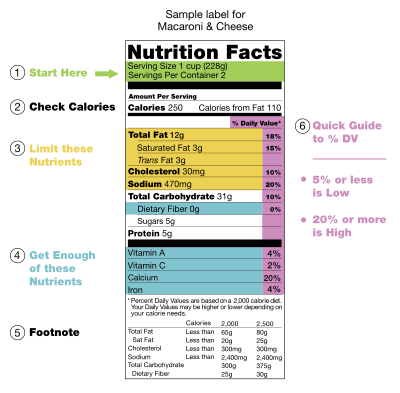
I'm sure you've seen this picture before; its on every pack of food you purchase, just that most people dont pay any attention to it.

Well, today's your lucky day, because I'm going to simplify the body of knowledge of GDA's for your benefit.

GDAs are guidelines for healthy adults and children about the approximate amount of calories, fat, saturated fat, total sugars, and sodium/salt in the particular product. The GDA labels have the percentage of daily value per serving and the absolute amount per serving of these categories.

Although these key nutrients form an important part of a balanced diet, unfortunately many people tend to consume too much of them. Long term overconsumption of calories in combination with a lack of physical activity is associated with gaining weight and obesity, which increases risk of poor health and various diseases.

Calories (Energy GDA: 2,000 kcal)

Calories are a measure of how much energy food and drink products contain. TheGDA label Calories example calories a food delivers depend on the nutrients it contains. A gram of carbohydrates has four calories, just like a gram of protein. One gram of fat instead has nine calories and a gram of alcohol seven calories.


Being overweight is a direct consequence of excessive calorie/energy intake, which in turn can increase the risk of conditions such as heart disease, diabetes, high blood pressure and ill health. However, eating too few calories is just as damaging to your general wellbeing and can lead to serious health conditions caused by nutrient deficiencies. 

The Guideline Daily Amount for energy is 2,000 calories, 

Sugars (Sugar GDA: 90g)


Sugars, together with starches, are the two main types of carbohydrates and the main sources of energy. Sugars provide a sweet taste, texture, structure and consistency to foods.

GDA label example sugars

Sugars play a role in functions of the body; the brain needs glucose (a simple sugar) as its only source of energy and the body's tissues use sugar (stored in liver and muscles) to carry out their main functions.


While neither starch nor sugars have been found to have any special role in the development of serious diseases such as diabetes it is still important to keep an eye on their intake if you are already suffering from some diet-related medical condition, if you are watching your waistline, and to limit the risk of tooth decay.

The Guideline Daily Amount for sugars is 90 grams.

Fat (Fat GDA: 70g)

Fat provides energy (nine calories for each gram of fat), and foods that contain a lot ofGDA label fat example fat provide a lot of energy. 

Fat is made up of different types of fatty acids. You can have monounsaturated (such as those found in nuts and vegetable oils), polyunsaturated (such as those found in oily fish) and saturates fatty acids (such as those found in butter and animal fat). 

It is important to have some fat in our diet because it's a critical nutrient for many functions that take place in our body and because some of them (the essential fatty acids) cannot be produced by our body and must be supplied by the diet.

Fats are important for the formation of hormones, which carry fat-soluble vitamins, and are necessary for their absorption. However fat is only needed for health in small amounts. No more than about one third of our energy intake should come from fat. 

Some examples of foods high in fat are oils, butter, full-fat milk and cheese, pies and pastries.

Whilst monounsaturated and especially polyunsaturated fatty acids are good for our health, a high intake of saturated fatty acids can have a negative impact on health, which is why we can have a GDA for both total fat and saturates (saturated fat), so we can help you keep an eye on your intakes. 

The Guideline Daily Amount for fat is 70 grams,

You will see on the food label GDAs for both fat and for saturates (saturated fats). The GDA figure for fat is the total amount of fat a food contains - this includes saturated and unsaturated fats.

Saturated fat (Saturates GDA: 20g)

GDA label saturates Saturates (saturated fat) are the type of fat you should try to eat less of because too much can increase the amount of cholesterol in the blood, which in turn increases the chance of developing heart disease. Eating less of it minimises the risks.

Experts recommend that not more than 10 percent of your calories should come from saturates (saturated fats). This means that on a 2,000 calorie diet you shouldn't eat more than 20g per day. 

Some examples of categories of foods high in saturates (saturated fats) are meat products and pies, sausages, hard cheese, butter, pastry, cakes and biscuits, cream and palm oil.

The Guideline Daily Amount for saturated fat is 20 grams.

Salt (Salt GDA: 6g)

Salt is used in food manufacturing as a flavour enhancer, a food preservative, to inhibit microbiological spoilage and to give texture to some foods. Salt is made up of sodium and chloride and it's the sodium that, at high doses, can be bad for your health. 

GDA label salt example
Sodium together with other nutrients plays many important roles; for example, it helps to regulate the body's water content and it's involved in nerve function, in muscular activity and in energy utilisation.


An excessive intake of salt (sodium) in the diet can increase the risk of high blood pressure which is a risk factor for heart disease and stroke. This is why it is generally recommended to limit the daily intake of salt to 6 grams (2.4g sodium) and to check and compare the salt/sodium content of a food on the front of pack or back of pack nutrition labels.

The Guideline daily Amount for salt is 6 grams (2.4 grams sodium).

Know your Nutrition!!!!!

Thursday, 29 September 2011

MY SIX PACK HAS RETURNED!!!!!!!

Those stubborn rolls of flesh around your middle, affectionately known as love handles, are more of a nuisance for men than women since that's one of the first places men store fat. But no matter who owns them, the only way to erase love handles is to lose weight!!!! With overall weight loss, you'll eventually see [the reduction] in your love handles.

The fastest and most effective way to reduce love handles is to double team exercise and diet. This is because if you tone without losing weight, you'll end up with muscle covered by a layer of fat.

First, lose excess fat by getting plenty of aerobic exercise and eating a healthy low-fat (this means low in saturated fats) diet; you need to burn off 3,500 more calories than you take in to lose a pound, that's about an extra hour of exercise or one less chocolate muffin per day for 10 days.

You can discipline yourself to avoid fatty foods by calculating the amount of calories it would provide and the amount of exercise needed to burn those calories (note:  unutilized energy is ultimately stored by your body in the form of fat)and committing yourself towards burning off your calorie intake from that meal or snack.

For example, lets say a tub of chocolate ice cream provides 3500 calories ( if you check the nutrition information on the packs of most food products, you’ll see the amount of calories it will produce), you will need to run for about 10 km to burn off that energy. If you go ahead and eat the ice cream, make sure you run or walk the 10km required to burn it off. After a few workouts of this nature, you’ll be more careful about what you eat.

Second, you can “spot build” by focusing on the underlying abdominal muscles—rectus abdominus, external and internal obliques (the muscles at your sides)—and your back muscles.

A good weight loss diet incorporates 3 major meals and 2-3 subsidiary meals. For instance you can start your day with two glasses of water at 6:30am eat a fruit with a bowl of oatmeal with honey, limiting your milk to two level spoons. Eat fruits BEFORE meals!!!! At 9am you could eat two slices of bread with a boiled egg (not fried!!); at 12pm, eat a can of tuna, or two boiled eggs. At 3pm you could eat beans, rice, amala (or preferably wheat meal) with fish. Luckily for us in Nigeria, our soups have high nutritional content, however, substitute high fat cooking oils with lower fat oils. By 6pm, your system should be winding down, so you could eat a vegetable salad with lots of tomato; alternatively you could eat foods that are high in fibre as it aids bowel movements on the morrow. You could cap dinner with a cup of tea with honey.

Make sure you savour each bite of your food, it helps digest it more effectively. Also try keeping some dried fruits and nuts at hand when you're in the office. they are very effective when you are feeling peckish; and the cravings can get very bad. Alternatively, you could prepare a pack of carrots which you could carry in your bags, especially if you're female.

Note: Avoid alcohol, even small amounts of alcohol can disrupt your normal hormone balance and weigh down your dieting efforts for days afterwards. Besides, alcohol packs almost as many calories per gram as pure fat.

Abdominal Exercise

For any type of abdominal movement to effectively train the abs, it must require a crunching movement or folding of the torso.

The basic abdominal crunch effectively defines and increases abdominal mass. With a traditional crunch, you lie on your back with your feet up on a bench or in the air where you are balancing them and roll your head and shoulders toward your pelvis by contracting your abs, your shoulders should not rise more than 45 degrees from the floor. During this movement, you are also pressing your lower back into the floor. To make the exercise more difficult, place your feet on a bench or against the wall.

While the crunch tends to emphasize the upper portion of the abdominal muscles, the lower portion, along with the hip flexors, contracts to maintain stability in the lower ab-hip region to allow for proper upper body movement. The muscles involved include the rectus abdominis, external and internal obliques, and to an extent - the hip flexors. 

The reverse crunch stabilizes your upper torso to put the focus on the lower abs. The reverse crunch uses the weight of your legs to add resistance. To perform the reverse crunch, lie face up with your arms along side your body. Bend your knees and raise your thighs until they are perpendicular to the floor, which is the starting position. Inhale and hold your breath as your contract your abdominal muscle to pull or roll your pelvis up toward your chest. Your knees should move relatively close to your chest and your pelvis should come completely off the floor.

As you crunch, keep your knees bent so that muscular contractions do the work instead of momentum. Squeeze your abs at the top and slowly lower yourself back to the starting position. For an even stronger contraction of the lower abs, hold your head and shoulders up. This tightens the upper abdominal region so that when the lower aspect shorts, it works harder to raise your hips.

Hanging leg or knee raises involve the same crunching movement but require a higher level of fitness, only with your body in a vertical position. Keeping your legs straight during the movement makes this lower-ab exercise even tougher. To perform this exercise jump or step up to a high bar so that when you grasp the bar your body hangs without your feet touching the floor or you can perform this exercise on a vertical bench.

Fully extend your arms and lower body when hanging from the bar. Your lumbar spine should be slightly arched. Inhale and hold your breath as you first bring your legs slightly behind your body, then quickly raise them forwards and upward as high as possible. Keep your legs straight but not locked out.

If you have tight hamstrings ( the muscles at the back of your thighs), keep a slight bend in the knee. For the exercise to be most effective, your legs should come above the level position, at which point you should hold the peak contraction for 1-2 seconds as you exhale. Relax slightly as you return to the starting position.

 If this exercise is too difficult to perform with straight legs bend your knees further to decrease the resistance. The key is to allow your pelvis to rotate maximally as your legs rise. Concentrate on curling your pelvis after you get your legs moving upward.

The obliques are generally the muscles that make your waist too big. Powerful obliques are important stabilizers for strength athletes, but if you want to create a lean, defined torso, then it is better to rarely train your obliques with weights. Doing weight oblique work tends to thicken your waistline instead of tapering it.

Side bends without weight or twisting crunches should be enough. Another strategy for keeping your waistline small is to perform stomach vacuums. They are great for exercising control of your abdominals and taper your waist.

To begin, stand straight with your feet shoulder width apart from each other. Place your hands on your hips. This is the starting position.

Now slowly inhale as much air as possible and then start to exhale as much as possible while bringing your stomach in as much as possible and hold this position. Try to visualize your navel touching your backbone. One isometric contraction is around 20 seconds. During the 20 second hold, try to breathe normally. Then inhale and bring your stomach back to the starting position. Once you have practiced this exercise, try to perform this exercise for longer than 20 seconds. Tip: You can work your way up to 40-60 seconds. Repeat for the recommended amount of sets. 

Training the abdominals are the same for men and women but results are determined largely by your gender. Men naturally carry the majority of their fat around their waist, whereas women tend to carry theirs on their hips and thighs. Thus, it is harder for a man to get his abs to appear. He must be extremely lean. Regardless of your gender, developing your abs occurs between the pelvis and the ribs. 

Start the journey toward building streamlined abdominals one step at a time, make sure you've got the right fundamentals, and the reults will astound you.
Harness the power of music to make your workouts more enjoyable.