Total Pageviews

Showing posts with label effectiveness. Show all posts

Wednesday, 20 August 2014

INTENSITY: THE KEY TO FITNESS SUCCESS

A gym peeve of mine is seeing people working out with too little intensity (intensity refers to how hard you work). I often see gym goers lifting far less weight than they should be working with, reading novels, and carrying out animated conversations during their workouts. As a general rule, if you can carry on a conversation whilst you are working out, then you are not working at the appropriate intensity. You should feel like your muscles have been thoroughly worked out, but you should not feel so utterly exhausted that you can't do anything else after the workout.
 
 
You can improve your workout intensity by working out for shorter periods of time whilst increasing weights and distance, cross-training, working out on an incline bench, and maximizing your body weight while working out, by using a weighted vest or ankle weights.
 
Research has shown that the higher the intensity, the more calories you burn, not only while exercising, but after you leave the gym, when your body benefits from an“after-burn” mode. Research also indicates that strenuous exercise blunts your appetite after workouts more effectively than longer sessions of easy exercise do.
 
By increasing the intensity of your workouts, you save time and improve your fitness, helping you to achieve and exceed your fitness goals much faster.


Saturday, 26 July 2014

Ward off Alzheimer's by keeping your body & brain in shape

By Kimberly Garrison, Daily News Personal Fitness Columnist
 
A NEW STUDY has delivered compelling evidence that diet, exercise and other prescription-free interventions are the best way to ward off Alzheimer's disease.
 
Alzheimer's is perhaps the most dreadful of modern diseases: It steals your mind, your personality and your very soul. And once you have it, there is no turning back.
 
On a personal note, I have seen firsthand the slow, devastating effects of this awful disease on a loved one, as well as the family members.
 
So, my ears really perked up when I heard about the groundbreaking study that was presented at the Alzheimer's Association International Conference. It demonstrated that after only two years, individuals at risk for the disease who made dramatic lifestyle changes showed significant improvements.
 
According to the Finnish Geriatric Intervention Study to Prevent Cognitive Impairment and Disability study, lifestyle behaviors like exercise, a healthy diet and friendships staved off the cognitive declines that are common to Alzheimer's.
The two-year randomized study assessed more than 1,200 individuals at risk for Alzheimer's. While the control group received typical medical advice, the lifestyle makeover participants received extensive dietary, exercise, cognitive and social training, as well as training in management of metabolic and vascular risks.
The results of the lifestyle participants was nothing less than stunning and delivered benefits that no technology or medication to date can trump.
Here are some of the simple, though clearly impactful treatments:
* Nutritional counseling sessions with a focus on consuming more fruits, vegetables and fish.
* Initially, emphasis on weight training one to two times a week and cardiovascular training two to four times a week. Ultimately, participants were encouraged to continue with strength training and ramp up cardiovascular training to five to six days per week.
* Throughout the study, various cognitive training exercises were also provided to participants.
So, since there is no medical treatment to cure Alzheimer's once it occurs, prevention is our only hope. Lucky for us, prevention may be as near as the kitchen, the gym and woven into our personal relationships.


Sunday, 8 June 2014

5 WAYS TO IMPROVE YOUR WORKPLACE PRODUCTIVITY

Productivity is the combination of intelligent planning and focused efforts designed to help you do more, better.  Productivity can be continuously improved, not by multitasking (which only clogs your mental pipelines), but by doing the following.
 
1. Leave Early: If you're putting in long hours and are not feeling productive at the end of the day, try shortening your work day by 30 minutes or even an hour.
 
2. Constantly ask yourself if you what are doing presently is productive: I often catch myself spending a lot of time using Facebook or participating in irrelevant conversations while at work. When I realize that I am not working on something productive, I mentally scold myself and get back to the grind. 
 
3. Weed out distractions: I know a few people that have a Facebook, Twitter, LinkedIn, YouTube, Instagram, Hootsuite, Tumblr, Foursquare, Shutterfly, Pinterest, Google Chat, Reddit, and StumbleUpon account. When they are not using these social media tools, they may be checking their e-mail on their smartphones or reading random facts on Wikipedia every 5 minutes. Disconnect from these tools while at work, it destroys your productivity!
 
4. Set ambitious, yet realistic goals
Les Brown, a motivational speaker and radio DJ, once said “Shoot for the moon. Even if you miss, you’ll land among the stars.” If you can cross everything off of your to-do list in one day, you need to create more ambitious goals. Some goals should take as long as 1 week, 30 days, 60 days, or 90 days. People that set higher goals have a tendency to be more satisfied than those with lower expectations, according to research published in the Journal of Consumer Research.
 
One of the major reasons why people fail a goals is because they did not set a deadline. Goals have to be very specific and they should be written down. It is good to get feedback about the goals in order to refine them.
 
Goals should be personal and professional. Spending time balancing your budget can be a personal goal and putting together process flow charts to make certain recurring tasks easier at work is a professional goal.

Tuesday, 20 May 2014

15 WEEKS BODY TRANSFORMATION - FREELETICS


When a man takes his destiny into his hands and proceeds to shape himself into whom he wants to be, he ceases to be a mere man, and approaches apotheosis. #LegallyMuscled bites

"A man is literally what he thinks, his character being the complete sum of all his thoughts."

"As the physically weak man can make himself strong by careful and patient training, so the man of weak thoughts, can make them strong by exercising himself in right thinking."


The Aphrodite workout is the beginners phase of the freeletics workout program. It is helpful if you perform it in a group with other trainees; this keeps you motivated when you start to hurt.


APHRODITE

Your first workout is called Aphrodite. It does not require equipment. There are no mandatory breaks. That means you are supposed to complete the workout without taking breaks - if possible. It is important to complete it in the exact same order as stated below and to work through it as fast as possible. Quitting is not an option.

WORKOUT STRUCTURE
5 Rounds Round 1 Round 2 Round 3 Round 4 Round 5
Burpees     50           40            30          20          10
Squats       50            40            30         20           10
Situps        50            40            30         20           10
BURPEES

Start: Start from a standing position. Knees, hips and shoulders are in a vertical line. Make sure to keep your core tight.

Movement: Make your chest touch the ground. Get back up (however you want to, not necessarily a strict push-up) and perform a jump – both feet have to leave the ground, knees, hips and shoulders have to be in a vertical line and the hands have to touch behind the head.

End: When your feet touch the ground again, one repetition is completed.

Modified version: If burpees are too difficult or become too difficult during the workout, do the modified version:

Move into the push-up position without touching the ground with your chest.

SQUATS

Start: Start from a standing position. Knees, hips and shoulders are in a vertical line.

Movement: Lower your hips below your knees.

End: Return to starting position to complete one repetition.

Additional remarks: Make sure to keep your weight on your heels, your chest up and your back flat. Push your knees out and keep your torso as vertical as possible.

Modified version: If squats are too difficult or become too difficult during the workout, do the modified version:

Lower your hips as far as you can instead of lowering them below your knees.

SITUPS

Start: Start from a sitting position. Both of your hands touch the ground in front of your feet.


Movement: Move your torso downwards and touch the ground behind your head with both hands.

End: Return to starting position to complete one repetition.

Additional remarks: Your butt may never leave the ground. Make sure too keep your core tight.

Modified version: If situps are too difficult or become too difficult during the workout, do the modified version: Touch your knees instead of the ground in front of your feet.

WORKLOAD
In general, we recommend you to train Freeletics at least four times per week. Since this is your first week, three times is fine as well.
Freeletics is really tough, especially at the beginning. Workout times exceeding an hour are totally normal. Also, don’t be discouraged if you can’t make the workload from day one. It is all part of the process. You will improve much faster than you think.

Your fastest time is called personal best (PB). If you complete a workout without a single modified repetition, the workout time receives a star (*). Star times are always ranked before workout times without a star, even if they are slower.

We recommend you to warm-up before every training session and to stretch afterwards. Jogging, jumping jacks, arm circles, light stretching and the like are suitable to warm-up.

Please take a picture of your body before you train Freeletics the first time. Take a new one every ten days. Pictures are important to evaluate physical changes. Since you only change a little every day, you will not be able to track your progress properly without pictures.

Have fun in your first week as Free Athletes!

Freeletics Instructor Team


Tuesday, 6 May 2014

SHOCK THERAPY 2: LEGS OF STEEL

I hate Leg training, but I know that if I don't train my legs as hard as possible, I'll have a fantastic upper body and spindly legs.
 
This workout starts with Heavy Volume Sumo Deadlifts. Sumo deadlifts incorporate your legs and your back. Stop each set when you can't exert anymore, or when you feel like that next rep might put you in a precarious position to injure yourself. Put the bar down and take your rest, and then resume the attack.
 
Hamstring exercise   Sumo deadliftSumo deadlift
 
You have to perform 100 heavy reps in as few sets as possible. This of course implies that you may have to go easy on the weight, lifting only as much weight as your body can handle for such an extreme repetition range.
 
Leg Press. My fav Excercise that i do at the gym.
easy
Leg press... Jay Cutler
Hard

 
Heavy Leg Press
 
After exhausting your lower body with the deadlifts, move over to the leg press machine and crank out 100 heavy reps, using as much weight as you can manage. Start with the heaviest load you can take and reduce the weight when you can't do one more rep at the set level.
 
 
the proper way to lunge and make sure you use your butt to do itLunges with Dumbbells
 
Weighted Lunges
 
At this point, your legs must be shaking, but it's not over yet. Your next action is to pick up the heavy dumbells and crank out some weighted lunges. Your aim should be to deliver 100 repetitions per side. This exercise hits the quadriceps, calves and hamstrings at once.
 
Squat jump
 
Bodyweight Squat Jumps.
 
The Squat Jump works your lower body and burns major calories. squat jumps offer a new take on the traditional — one that you're definitely going to feel in your quads and your deep glutes. Stand with your feet shoulder width apart and slightly turned out, arms resting on your hips. Bend your knees and plié, then jump up explosively. Keep your core engaged. Land with control, lowering your body back into the squat position to complete one rep. Do 50 reps.
 
The End Result? See for yourself.
 
You 'Mirin?


Friday, 17 January 2014

STAYING RIPPED AT THE OFFICE

You 'Mirin?
From Flab ...to Fab


Getting ripped for the working person is hard, period. It's doubly difficult for a person who has little control over their diet, schedule or equipment. 
 
So, how do you maintain that ripped body you've worked so hard to develop if you are stressed, chained to your desk, and can only access junk snacks? I chewed this question over, and I gathered some tips for keeping those muscles hard and ripped whilst giving your best at work.
 
  • Get yourself a mini-fridge or cooler where you can stock healthy food and drinks.
  • Eat a hearty breakfast, and Prepare yourself a healthy snack and lunch which you will take to the office. Alternatively, seek out a service which can supply healthy meals to your office.
  •  
  • Whenever you go to the bathroom, try to crank out as many jumping jacks or squats as you can reasonably perform without sweating too much. In addition to reducing the risk of heart disease and weight gain, these exercises will improve blood circulation and lower body strength.
  •  
  • Long term sitting is energy draining!! So, take a 10 to 15 minute power walk around your office if possible. You could use the opportunity to get to chat with your fellow employees, thereby providing you with the added benefit of being sociable.

Monday, 11 November 2013

MARRIAGE AND WEIGHT GAIN

We all see it, a fit and sexy single guy or girl gets married and in a few months gets the spare tire, love handles, pot belly, turkey arms, etc.(If you doubt me, look up your parents pre wedding pictures.)  
Kim +Kanye, 20 years on??

Unfortunately, a recent study revaled that weight gain constitutes the biggest relationship peeve for most couples.

The biggest culprit is the change in lifestyle that happens after marriage. The reason for this is simple; when a person is single, they feel the need to look sexy and attractive, so they adopt lifestyle choices such as dieting and exercise. With marriage and the attendant adjustments however, couples tend to slack off on healthier choices. Your partner may even encourage less-than-healthy habits. "When you're combining lifestyles, sometimes the less active one wins out," says Cheryl Forberg, RD, nutritionist for The Biggest Loser and author of the cookbook Flavor First. for instance when your guy wants you to skip your morning run to sleep in with him, it's easy to roll over and give in.
You don't have to get like this!!!


There's no need to fear, research shows that couples that work out together have a 94% chance of sticking with their fitness programmes. Couples can motivate themselves toward a healthy lifestyle while sharing some emotionally beneficial quality time. In order to do this however, the couples should identify activities which they mutually enjoy. Activities which couples can enjoy together include:

1. Dancing
Take a Latin dance class or alternatively, head down to the hippest dance club in town and break out some moves. Avoid too much alcohol and drink lots of water while youre at it (You wouldn't want to do something you'll regret later on!!).


2. Martial Arts
 Taking a martial arts class together helps the couple build a healthy respect for each others physical abilities, in addition they can work out together and provide mutual support to each other in the process.
 

3: Swimming:
 This low impact and enjoyable activity can provide hours of quality and healthy entertainment to the couple, as well as being a wonderful prelude to some bedroom activity (*wink*)

 
4. Biking:
 You and your partner could take a nice bike ride and enjoy the environment together reminiscent of how you hung out with your siblings when you were young.


Wednesday, 23 October 2013

STYLE IN FITNESS: THE ROLE OF MASS MEDIA IN FITNESS


Bodybuilding is an art form, and I have always held the opinion that a person's physical structure should be aesthetically pleasing, whilst retaining functionality. I have found that the kind of body developed by individuals has changed over the years in line with the kind of physical structure favoured by the media. However, I have realised that there are a lot of people out there who like training, working out, and even like competing, but who don't want to look like the modern bodybuilder. 
The Modern Man


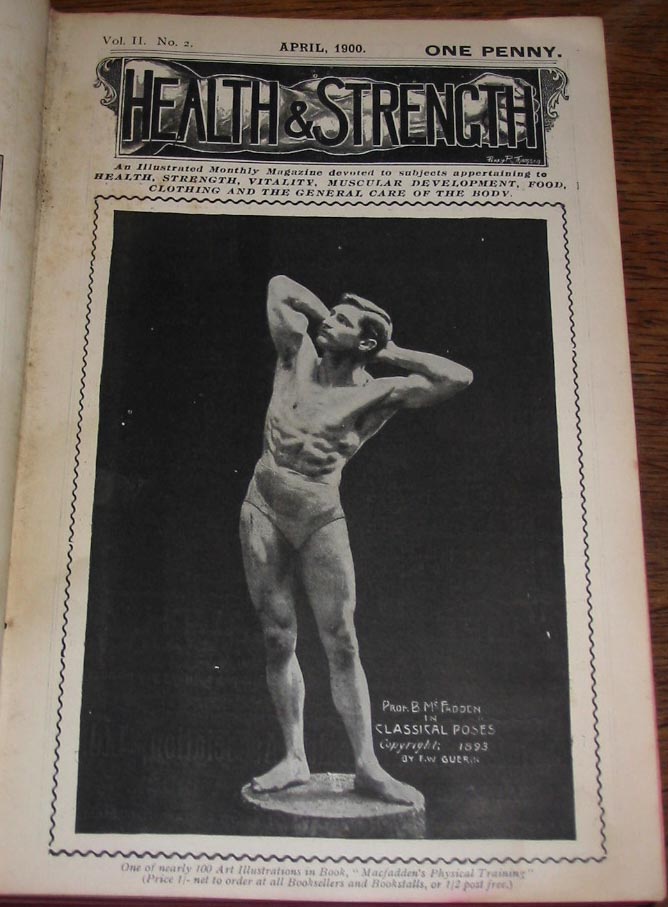
In the period between 1890 to 1920, when bodybuilding was still called 'physical culture' emphasis was placed on a practitioner's ability to perform magnificent feats of strength whilst looking presentable in suits, which were the everyday clothes worn at the time. Thus his training was focused on lifting consistently heavy weights and performing gymnastic and calisthenic exercises. A lean, muscular and strong physique was favoured, and definition and symmetry was not particularly required in competitions, leading to the rather rough edged bodies of the time. 
 

In writing this article, I had recourse to Health and Strength magazine, one of the oldest fitness publications, reaching back as far as 1876 as well as Mens Health, Flex and other fitness material.


With the period between 1925 and 1950, the aesthetic seemed to have changed due to the increased acceptance of fitness, the advent of fitness competitions and increased magazine distribution, requiring bodybuilders to develop more visually pleasing bodies as well as a bulkier physique.  Definition, symmetry and cleaner lines were prized at this time, and emphasis on strength  was reduced in order to appeal to the general public.  

Women started to participate in fitness competitions as feminism gained more adherents and women became increadingly encouraged to take control of their destinies. This led to fitness publications featuring more female models, presumably because women clad in skimpy outfits may have sold more magazines. Female fitness models were expected to retain their femininity have broad shoulders, flat stomachs and tiny waists.


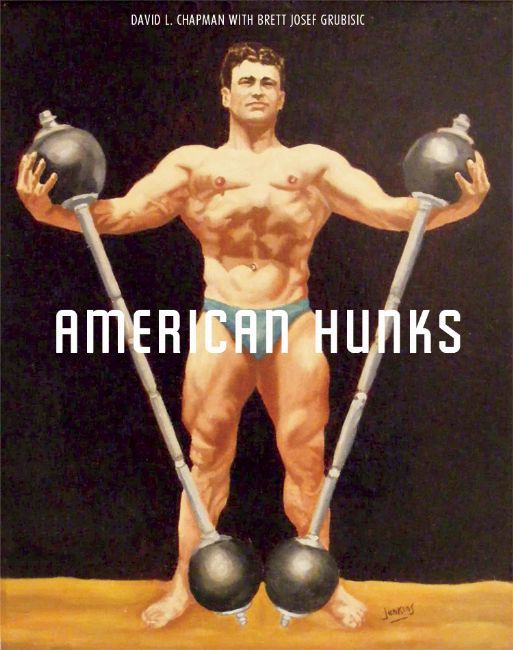
I believe something went wrong between 1950 and 1960, especially with the increased proliferation of the television and the development of broadcast media as a competitor to print media. It seemed like the media was trying to define how a bodybuilder should look. There was a conflict between the way print media believed an accomplished bodybuilder should look, and this influenced the governing aesthetic.  As you can see in the magazine covers below, the model on the left is far slimmer and more defined than the model on the right. A bulkier, less defined physique with broad shoulders and slim arms was preferred in the 50's and you can see this in the way movie stars of the day were built.

 At this time, it seems that female fitness was de-emphasised, as female models seemed to appear only on precious few covers. It should be noted that the Miss World (1951) and Miss Universe (1952) pageants commenced within this time and it is possible that public opinion may have required that emphasis be placed on female beauty, as opposed to athletic ability. The rise of beauty pageants possibly led to the rise of the 'burn fat!!!' movement and the portrayal of the thin woman as 'beautiful'.  
 

Happily, the conflict of the 50's gave way to a resurgence of enlightened bodybuilding between 1960 and 1969, probably due to increased education about nutrition and innovations in training equipment which enabled bodybuilders train with improved effectiveness and recieve quicker resultsHowever, this aesthetic changed with the rise of the Mr. Olympia and media preference for larger than life bodybuilders. Between 1970 and 1990 the increasing use of steroids and supplements by bodybuilders led to the evolution of the superhuman bodybuilder. There was also a resurgence of interest in female fitness, although the reappearance of women on magazine covers was more of an exploitation of their sexuality than an affirmation of their place within the fitness world.
From 1970, increased emphasis has been placed on muscle size and definition, leading to the prominence of the 'six-pack' as evidence of fitness. Innovations in training methodology also enabled the development of finely defined physiques. 

The rise of the internet and the explosion of fitness websites and enhanced information about fitness has led to the growth of a movement towards individual fitness. Ordinary people are becoming increasingly aware of their ability to change their bodies and improve their quality of life